By Hezron Ochiel
While working on a five-year health advocacy programme across Kenya, Uganda, Tanzania, Malawi and Zambia, I encountered a challenge that changed how I thought about journalism training.
We needed journalists who could understand health issues, interpret technical information and explain it clearly to the public. Finding enough journalists with specialised health reporting experience was difficult.
That experience raised a practical question: Instead of waiting to find specialised health journalists, could we help build that capacity?
The challenge became clear
My journalism career had prepared me to cover different subjects depending on what the newsroom needed.
That versatility is valuable, especially in newsrooms where reporters are expected to move between different beats. Health reporting, however, often requires deeper subject knowledge because journalists need to understand research, question technical experts and translate complex information into stories people can understand.
I did not begin my journalism career as a health specialist. I learned through reporting, conversations with experts and continuous reading.
That experience later shaped how I approached journalist capacity building.
A media advocacy programme exposed the gap
The challenge became much clearer when I joined a media advocacy programme at Amref Health Africa.
The five-year programme worked across Kenya, Uganda, Tanzania, Malawi and Zambia and sought to strengthen health systems through advocacy.
Media engagement was an important part of that work because journalists could help communities understand health issues, bring local experiences into public debate and draw policymakers’ attention to problems that needed action.
I have explored this relationship between communication, advocacy and policy influence further in my article on what I learned after more than 15 years in PR.
As the programme’s communications lead, I needed journalists who could engage confidently with health issues.
There were fewer than we needed.
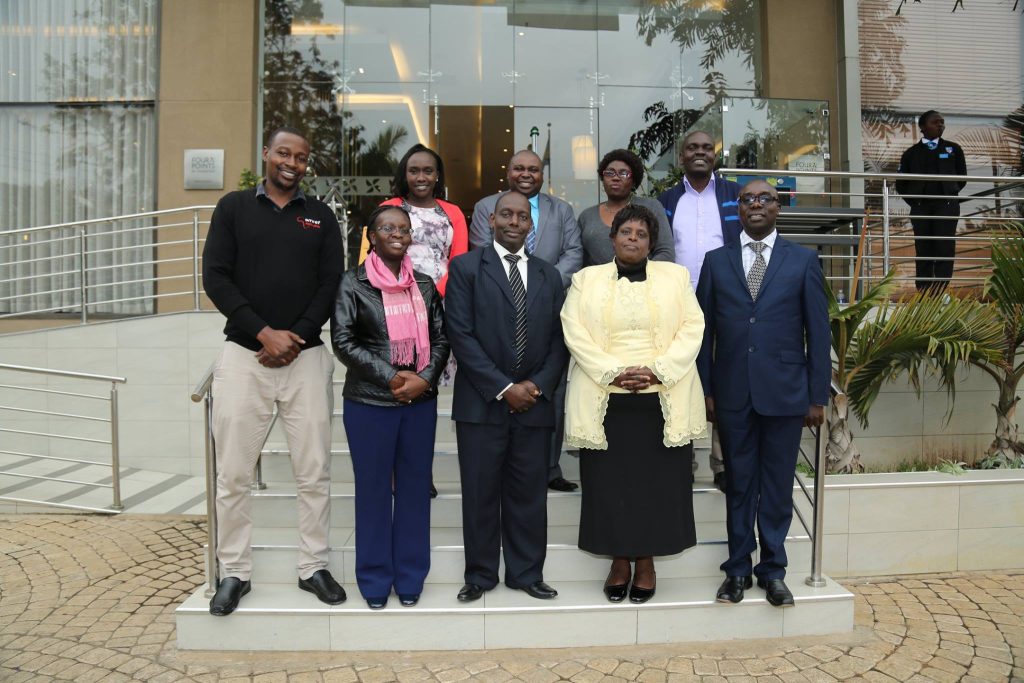
We therefore opened our training to journalists interested in health reporting and willing to deepen their knowledge.
That experience showed us that journalists were interested in specialised health reporting when they had access to the right training and support.
Training alone was not enough
The early training sessions responded to immediate programme needs.
We brought journalists together around a health issue, helped them understand the subject, and supported them as they developed stories.
The approach was useful, but another question emerged: What happens when the project ends?
Training that depends entirely on short-term projects can disappear when the funding or programme cycle ends.
As demand grew, we began thinking about a more structured way of building health journalism skills.
The idea was to move from occasional workshops to a programme with a curriculum, qualified trainers, practical assignments and a way to assess learning.
That shift became one of the most important lessons from the experience.
When a skills gap keeps recurring, it’s worth creating a system that can keep addressing it.
Turning the idea into a structured course
The work eventually contributed to developing the Health Communication and Journalism course at Amref International University.
Amref International University formally introduced the course in 2020 to strengthen factual, evidence-based health reporting. Amref Health Africa and AMIU worked with partners to develop the curriculum, which covered health communication, research and data reporting, health policy, ethics and media advocacy.
The first cohort began in July 2020 with 20 participants from Kenya, Uganda, Tanzania, Zambia and Malawi.
One feature was particularly important: participants had to apply what they learned through a practical project.
The learning therefore went beyond the classroom. Participants were expected to research and develop work that demonstrated their ability to understand and communicate health issues.
This reflected something I had learned throughout my journalism career. Understanding technical information is only part of the job. The real test comes when you have to turn that information into a story people can understand and use.
I explore that challenge more deeply in my guide for journalists and PR professionals on reporting research findings.
The programme began to grow
What started as a response to a practical communication challenge soon attracted wider interest.
The programme was designed for journalists, public relations professionals and health managers, showing that the need to communicate health information clearly extended beyond the newsroom.
External support followed.
A partnership involving Twitter, Amref Health Africa and Amref International University began supporting journalists and health communication professionals through scholarships in 2020. By July 2022, Twitter’s financial contribution had enabled more than 40 journalists and health communication professionals to undertake the course.
That support showed that a skills gap first identified during programme implementation had developed into a training need that other organisations also considered worth investing in.
What the experience taught me
Looking back, the biggest lesson is that communication capacity should not depend entirely on short-term projects.
Projects can expose a problem, test an approach and show what works. When the same need keeps appearing, it’s worth turning the response into something that can continue beyond the programme that first identified it.
That is what happened with health journalism training.
A challenge we encountered while strengthening media advocacy became an opportunity to build skills more systematically.
The experience also strengthened my belief that good health communication matters because people make decisions based on the information available to them.
Journalists need the confidence to question evidence, understand technical information and translate it into stories that make sense to the public.
What started as a search for journalists who could support a health advocacy programme eventually contributed to a more structured approach to strengthening health journalism capacity in Africa.
Sometimes the most useful ideas begin with a problem you cannot ignore.
Hezron Ochiel is an award-winning strategic communications and public relations professional with over 15 years of experience in media, digital communication, and reputation strategy. He serves as the Deputy Corporate Communications Manager at the government-owned Kenya Medical Training College (KMTC) and is the founder of Hezron Insights, where he writes about AI visibility, Digital PR, SEO, GEO, and digital authority. His work has appeared on platforms including Reuters, The New Humanitarian, and The Standard.