

Warm cozy bed, local African dishes, and chatting with local communities are all I need to make my adventure perfect and memorable. I have longed to explore the world for as long as I can remember. I dreamed of touring every part of the Kenyan Republic, villages in Africa and the Caribbean, Europe, and beyond.
This dream was partly fulfilled this week when I toured Old Lamu town in Kenya, culminating in my long quest to explore my nation and its beauties. I finally made it to the list of folks who have been to nearly all counties in Kenya—from the North to the South, East to West.
My first foreign trip to Ethiopia in 2014, during my early career days, cemented my desire to visit new places, learn about their history and culture, and tell stories. Since then, I have never hesitated to join my colleagues on work assignments outside Nairobi.
My working life has always involved traveling. I have made many local trips but have also gone on some long-haul journeys, visiting places in Africa—South Africa, Rwanda, Malawi, and Zambia, to name a few. When I am outside, I get rejuvenated and gain new skills as new ideas come my way. New career advancements have been born out of such visits. For example, the decision to start giving back to the community through mentorships via www.hezroninsights was inspired by my trip to Mombasa in late 2022.
During that trip, while enjoying the tranquility of the Mombasa seafront in my exquisite room on Nyali Beach, an idea crept in. I quickly grabbed my notebook to jot it down, and a few months later, I started implementing it.
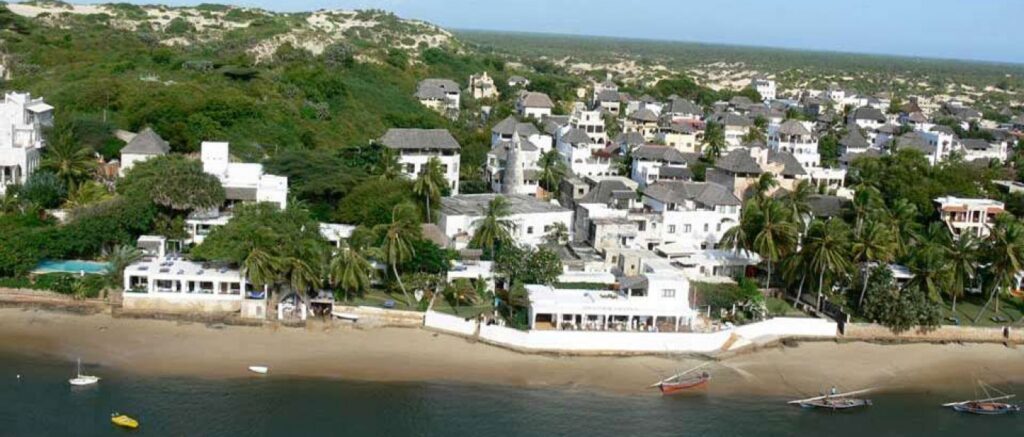
My Trip to Lamu
When my colleague Ronald asked in the company WhatsApp group if anyone was available to accompany him on a working tour to Lamu, I didn’t think twice—it was an opportunity I had been yearning for. Upon confirmation, we were booked on a morning flight the following week. Our team included Silas, the supply chain manager, Margaret, the report writer, and me.
It had been a while since I traveled to the coastal region, and I badly needed to go somewhere to rejuvenate—somewhere far from the noisy Nairobi capital. They say Lamu is rich in culture and kindness, something I wanted to confirm. Interestingly, it was all evident when we landed at Manda Airport a few minutes past 10:00 am.
At the airport, it was a full display of splendor with drawings of the ancient slave trade, painting the walls. Along the walkways, beauty was affirmed; mangrove trees sprouted, little birds moved from tree to tree, excited to welcome us home, and coral reefs were neatly arranged as if someone had done it before our visit—yet we were told it was the work of nature. Young men and women neatly displayed their artifacts, and printed T-shirts. They also had kitchen items like sugar dishes and salt shakers, all carved out of coral stones and mangrove wood. It was a display that would grab anyone’s attention.
A few meters past the arrival gate, middle-aged men were waiting with their boats to give visiting guests a ride of their lives to the nearby Lamu Island, the only mode of transport here. Luckily, our colleague Tony had made prior travel arrangements and procured a speed boat, on standby, ready to ferry us to our destination. I had ridden on a boat before, but for Ronald, Silas, and Margaret, it was their first experience. The tides were already building up, setting in a bumpy ride that lasted 15 minutes.
Upon arrival, our plan was simple: spend a few hours on work and use the remaining time to sample the town. Lamu, according to UNESCO, has retained its important status as a significant center for education in Islamic and Swahili culture. The Island is characterized by narrow streets and magnificent stone buildings with impressive carved doors, influenced by a unique fusion of Swahili, Arabic, Persian, Indian, and European building styles.
We couldn’t miss touring the impressive and magnificent Lamu Port, where we took numerous photos.
Our Trip to Old Malindi Town
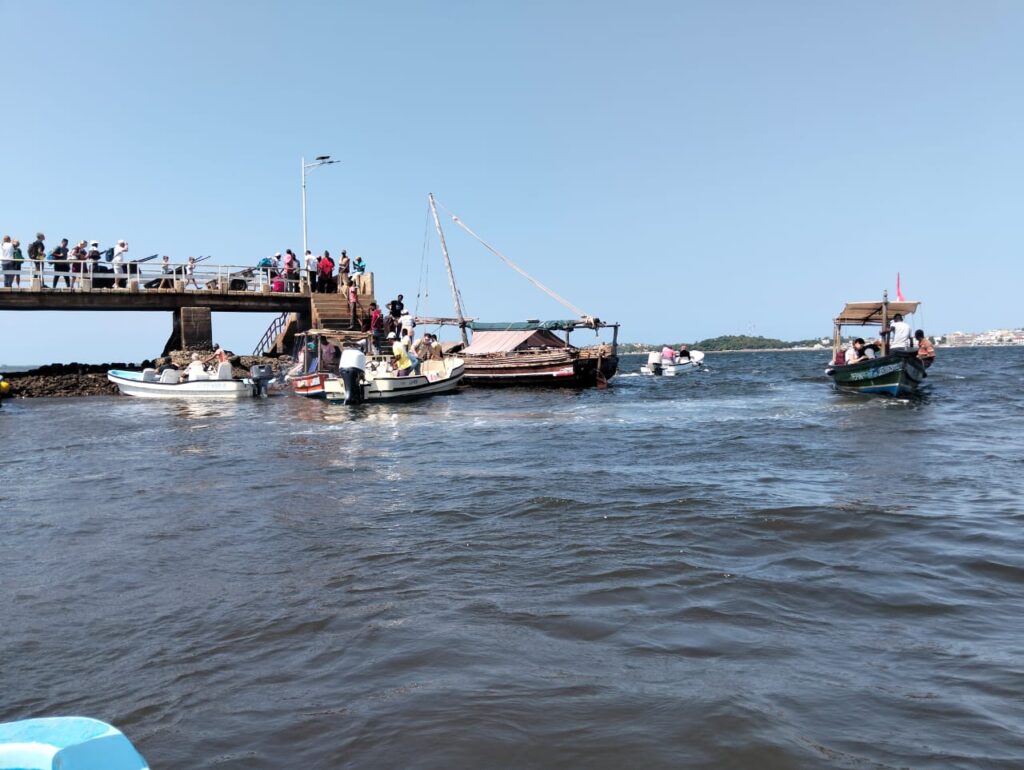
As night fell over the relatively quiet waters, it was time to ride to the town for an evening rest. Flickering lights filled the horizon. This time, we were not lucky enough to land a private boat, so we boarded a passenger one along with other travelers. At every stage, we stopped to drop them, one by one as we proceeded.
Instead of sailing in the deep waters, we chose shallow edges where lights from nearby hotels illuminated our journey as the boat roared past Lamu jetty and Mokowe. The eye-catching scenes of bustling floating bars, marooned in flickering blue and orange lights, were incredible. After cruising for about 30 minutes, we finally arrived in town, a charming destination for sailing trips and walking tours.
We headed straight to our hotel rooms. Trekking along the narrow streets was yet another interesting experience. Tony reminded us to be cautious since the road was busy with donkeys turned taxis ferrying goods and people. Along this stretch, tourists walked their dogs as vendors rushed to close their shops, and tourists returned from their excursions. In the room, a fine bed carved out of coral stone awaited. The building, a typical Swahili architectural work, had a roof blending cement and mangrove timber.
The hotel stood defiantly on the edge of the ocean. I landed in a sea-facing room, a prime spot to watch the sunrise over Lamu paradise. I kept my windows open to let in the sounds of rushing waters as the moderately warm wind swirled in, carrying away my exhaustion. The day at work was interesting, though quite intense.
During dinner, we had some deep conversations, about various topics, from nomophobia—the fear of being without a mobile phone, previous travel experiences, the slave trade, to retirement, while munching on seafood served with rice and vegetables, and some African tea. We laughed and made fun of Ronald, our team leader, whose phone had slipped into the ocean when we boarded the boat. Despite the inconvenience, we convinced ourselves that certain things are beyond our control.
That night, I discovered how my colleagues had experienced troubled safaris in their earlier days. When we finally laid down on our beds to rest, the waves were so loud that I thought the much-awaited tropical Cyclone Hidaya had finally landed in our neighborhood. I waited for the high tide to pass before I finally fell asleep.
The Following Morning
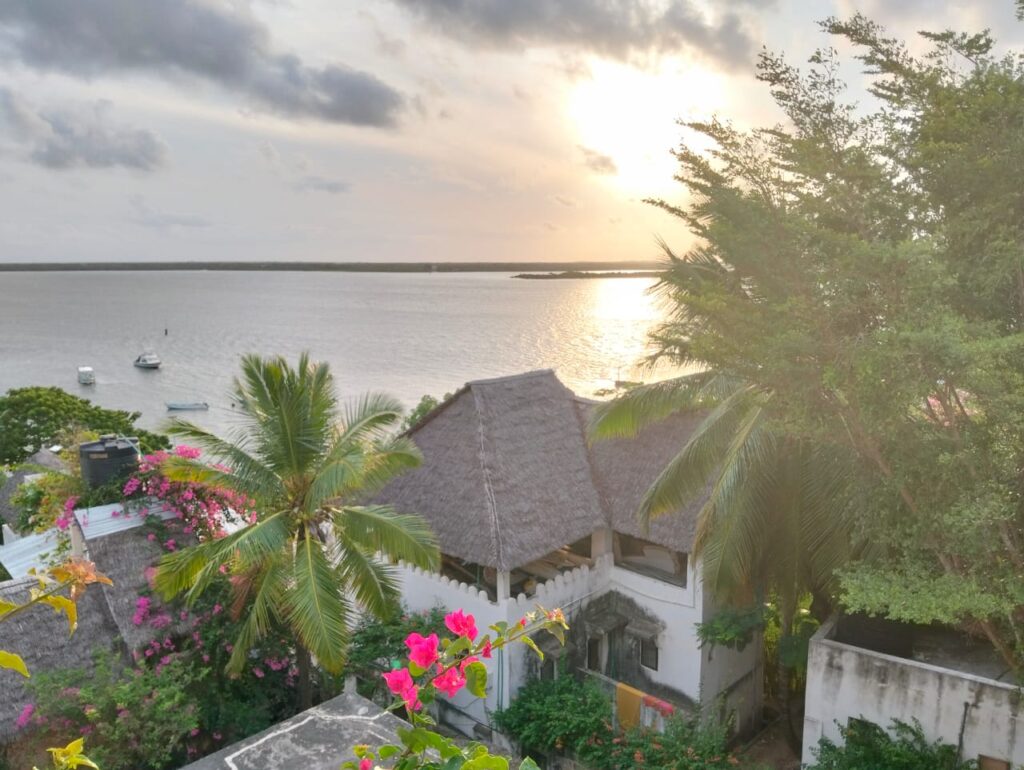
With dawn breaking and the sun rays beginning to fall on the quiet still waters, the Pied Cuckoo started its song, accompanied by Seagulls’ squawks. I sat quietly on the veranda, looking at the ocean as I waited for breakfast to be served. Watching birds make frantic moves over the place, and feeling the wind blowing the still waters was unparalleled. Occasionally, I stepped down and felt the cool cement floor soothing my bare feet.
My mind drifted into deep thoughts. Sitting on my couch, admiring the ocean, I visualized myself resting in unfamiliar lands, far from home. I had dreamed of touring places like São Tomé and Príncipe Island someday. My mind zoomed across Africa, Europe, and the beautiful Caribbean Island of Barbados, before landing back on Lamu. As the sun’s rays grew stronger, the birds sang much louder. Minutes later, the soundscape transformed into a beautiful melody of hundreds of birds, both near and far. The tides, winds, and swells determined my fate. This time, the exhaustion dissipated, and my lips curled into a soft smile.
Then, Ronald cut short my rest; it was time to grab breakfast and return to Nairobi.
Did you enjoy this article? If you’d like to be notified each time I publish a new one, feel free to SUBSCRIBE. And if you find value in my writing, please share your feedback in the comments section below.