

The Shift from Journalism to PR Is Accelerating
By Hezron Ochiel
The transition from journalism to public relations is becoming one of the defining career shifts in today’s communication industry.
Across Kenya and many parts of the world, journalists are increasingly rethinking their career paths as newsrooms continue to shrink and advertising revenue shifts toward digital platforms. Job security remains uncertain even after securing a newsroom role, pushing many professionals to explore more stable and strategic communication opportunities.
This shift reflects broader changes in how information is produced, distributed, discovered, and trusted in the digital era.
For many journalists, moving into public relations is becoming a response to structural changes affecting the media industry globally.
Industry trends reinforce this reality.
The global public relations market continues to grow steadily, with estimates placing its value at more than $100 billion as organisations increase investment in reputation management, strategic communication, digital visibility, and stakeholder engagement.
Traditional journalism continues facing declining advertising revenue, shrinking newsroom teams, audience fragmentation, and increased competition from digital platforms and AI-driven discovery systems.
This transformation is already reshaping the future of media globally. In my previous analysis of why newspapers in Kenya are facing slow collapse, I explored how audience attention is steadily shifting toward digital platforms, social media, search engines, and AI-driven discovery systems.
This trend is also creating new forms of digital entrepreneurship. In my article on how unemployed journalists are building digital news platforms and creating jobs, I explored how many journalists are leveraging digital platforms, newsletters, and niche publishing models to create alternative communication careers outside traditional newsrooms.
The communication landscape itself is changing rapidly.
Organisations today compete for visibility, trust, discoverability, digital authority, and AI recommendations. This shift has created strong demand for professionals who can explain complex issues clearly, shape narratives strategically, manage organisational reputation, and communicate effectively across digital platforms.
This growing shift is also changing how communication talent is evaluated. Skills such as strategic storytelling, digital visibility, structured communication, and discoverability are becoming increasingly valuable across organisations.
This is partly why more journalists are naturally drawn to public relations.
Journalists already possess many of the skills organisations increasingly value in the digital visibility era.
What Is Public Relations (PR)?
Public relations is the strategic practice of managing communication between an organisation and its stakeholders to shape perception, build trust, and influence outcomes.
PR focuses on organisational reputation, stakeholder engagement, communication strategy, digital visibility, and long-term credibility.
The goal is to ensure organisations are understood, trusted, visible, and positioned effectively across both traditional and digital environments.
This role has become even more important as search engines, AI systems, and digital platforms shape how people discover and trust information online.
As I explained in my recent article on how AI search is reshaping Digital PR and SEO, communication is no longer only about media attention. It now involves building searchable authority, trusted mentions, and digital footprints strong enough for both humans and AI systems to recommend.
Why Journalists Are Naturally Suited for PR
The movement from journalism into PR reflects structural changes in how communication functions within organisations.
Communication is now treated as a strategic asset, a reputation tool, and a visibility system.
This shift has also fueled wider conversations around the evolving relationship between journalism and public relations. In my earlier analysis on whether journalism has gradually turned into PR to survive global media trends, I examined how shrinking newsroom resources and increasing commercial pressures are reshaping communication roles globally.
This is where journalists often fit naturally.
Journalists already understand storytelling, audience behaviour, interviewing, research, content development, and information verification. These skills translate directly into stakeholder engagement, campaign communication, media relations, digital storytelling, executive communication, and reputation management.
Media relations itself remains one of the most important communication functions even in the AI era. In my article on why media relations still matters in the digital and AI age, I discussed how credible third-party visibility continues shaping trust, discoverability, and institutional authority online.
Journalists also possess something many organisations increasingly value in the age of misinformation and AI-generated content: credibility.
That credibility matters significantly as audiences become more sensitive to trust, authenticity, and information quality.
Journalists may actually hold a natural advantage in the AI visibility era because newsroom writing has traditionally emphasised clarity, structure, context, accuracy, and audience understanding. These are the same qualities increasingly shaping discoverability across search engines and AI systems.
The growing demand for communication professionals with digital visibility skills is also becoming more visible globally. In another recent analysis of the rising demand for SEO and GEO talent, I explored how organisations are increasingly searching for professionals who understand discoverability, structured communication, AI visibility, and search authority.
The skills gap is becoming increasingly noticeable across the communication industry. In one recent analysis on a KES 250,000 SEO role that attracted surprisingly little interest in Kenya, I explored how many organisations are struggling to find professionals who understand modern visibility systems, SEO, GEO, and AI discoverability.
Journalism vs PR: Understanding the Shift
A clear understanding of the difference between journalism and PR supports a smoother transition.
Journalism primarily focuses on reporting events and serving public interest through independent observation and storytelling.
Public relations focuses on shaping how information is understood by different audiences through strategic communication.
Journalism often asks: “What happened?”
PR increasingly asks: “How should this information be communicated, understood, and positioned?”
That distinction changes how communication is approached.
Journalists entering PR carry their discipline, accuracy, storytelling ability, and audience awareness into an environment that increasingly values strategic communication and visibility management.
The Hezron Transition Framework
One of the clearest patterns I have observed is that successful movement from journalism into PR usually follows a structured path.
I describe this as the Hezron Transition Framework.
1. Skill Mapping
The first stage involves identifying transferable skills already developed in journalism, including writing, interviewing, research, storytelling, editing, and audience analysis.
These skills form the foundation of the transition.
2. Strategic Repositioning
The second stage involves translating journalism skills into communication functions such as stakeholder engagement, campaign communication, reputation management, media relations, and executive communication.
This stage helps journalists begin thinking beyond reporting and toward a communication strategy.
3. Visibility Building
The third stage focuses on positioning.
Professionals begin publishing insights, building a professional brand, strengthening their digital visibility, and consistently demonstrating expertise.
This stage has become increasingly important as employers, audiences, and AI systems evaluate professionals through their digital footprints.
4. Practical Application
The final stage involves applying skills in real communication environments.
This may include drafting press releases, supporting campaigns, managing digital platforms, contributing to communication strategy, or participating in stakeholder engagement initiatives.
The framework reflects a broader communication reality emerging globally.
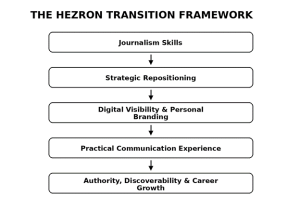
Visibility increasingly depends on how well professionals position their expertise, structure communication clearly, and build trusted digital footprints across platforms.
The Rise of Digital Visibility Has Changed Communication
One of the biggest shifts happening globally is the growing importance of digital visibility.
Modern communication increasingly depends on discoverability, authority, search visibility, structured communication, and trusted digital presence.
Search engines and AI systems now influence what people discover, which organisations get recommended, and whose expertise becomes visible online.
Industry experts from companies such as Microsoft, Bing, and Google have repeatedly emphasised that visibility increasingly depends on clarity, consistency, structure, credibility, and trusted information signals.
This shift has created demand for communication professionals who understand both storytelling and discoverability.
That combination is becoming extremely valuable.
Journalists are uniquely positioned to adapt because they already understand how to explain complex ideas clearly, structure information, and communicate effectively for human audiences.
The modern challenge increasingly involves combining those skills with digital strategy, visibility systems, SEO, GEO, and AI discoverability.
This explains why Digital PR is rapidly becoming one of the most important communication functions today. Communication professionals are increasingly required to think beyond publicity and toward discoverability, machine readability, digital authority, and AI visibility as search engines and AI systems continue reshaping how information is surfaced and trusted online.
I explored some of these communication and visibility shifts further in my article on how AI search is changing trust, visibility, and public relations in Africa, where I examined how AI systems are increasingly influencing discoverability, credibility, and institutional reputation across the continent.
A Real-World Perspective
In the newsroom, many strong stories did not always reach publication because of editorial priorities, audience preferences, or newsroom limitations.
Some stories were considered too positive. Others did not align with prevailing news narratives.
In the development and public sectors, the same storytelling skills often produced measurable institutional impact.
At Amref Health Africa, communication campaigns contributed to the recognition of Community Health Workers at the policy level.
At the government-owned Kenya Medical Training College (KMTC), digital storytelling and strategic communication significantly strengthened institutional visibility. Student applications grew from approximately 15,000 in 2021 to more than 50,000 in 2024, while the institution saved close to Ksh 30 million in advertising costs each year through digital communication initiatives.
These experiences demonstrated something important: Communication now functions as a reputation infrastructure, a visibility strategy, and an institutional influence.
This transformation is also fueling debate around the future role of communication professionals in the AI era. In my earlier article on whether AI will replace PR professionals, I argued that human-centred storytelling, strategic thinking, trust-building, and reputation management remain deeply human communication functions.
What Drives Success in PR
Journalists who succeed in PR usually develop a broader communication perspective focused on long-term organisational outcomes.
Strategic thinking becomes extremely important because communication must align with institutional goals, reputation priorities, and audience expectations.
Collaboration also becomes central to daily work.
PR environments require teamwork, stakeholder coordination, executive communication, and cross-department engagement.
Anticipation also becomes critical.
Strong communication professionals increasingly learn to identify risks early, proactively prepare messaging, and manage perception before issues escalate publicly.
Common Challenges Journalists Face When Moving Into PR
Some challenges appear early during the transition process.
Many journalists initially continue writing primarily for reporting rather than strategic communication.
Others struggle with collaborative environments, stakeholder alignment, message coordination, or balancing organisational interests with communication objectives.
Some professionals also underestimate how important digital visibility has become in modern communication.
Today, communication extends far beyond press releases, media interviews, and traditional publicity.
It now includes digital authority, AI visibility, SEO, GEO, discoverability, and machine-readable communication.
Recognising these shifts early often accelerates professional growth.
What This Shift Means for the Future of Communication
The shift from journalism to PR reflects a broader transformation across the global communications industry.
Demand continues growing for professionals who can simplify complex issues, build trust, communicate strategically, manage visibility, and strengthen organisational reputation.
The future of communication may increasingly belong to professionals who understand both storytelling and digital discoverability.
That combination is becoming one of the most valuable communication skills in the AI visibility era.
Journalists are uniquely positioned to thrive in this environment because they already understand how to communicate, craft narratives, and connect ideas with audiences in meaningful ways.
Communication itself is becoming increasingly interconnected with:
- Search visibility,
- AI recommendation,
- Digital trust,
- Discoverability, and
- Machine-readable authority.
Professionals who adapt early to this shift may not only shape visibility in the AI era. They may increasingly shape how institutions, expertise, and trust itself are discovered online.
Frequently Asked Questions
Can journalists transition into PR?
Yes. Journalists already possess transferable skills in writing, storytelling, research, interviewing, and audience communication that are highly valuable in PR.
Why are more journalists moving into PR?
Many journalists are transitioning into PR because of shrinking newsrooms, declining media revenue, growing communication opportunities, and increased demand for strategic communicators in the digital era.
What skills transfer from journalism into PR?
Skills such as storytelling, interviewing, research, editing, audience analysis, deadline management, and communication strategy transfer directly into PR roles.
What is the biggest difference between journalism and PR?
Journalism primarily focuses on reporting events independently, while PR focuses on shaping communication strategically to build trust, visibility, and organisational reputation.
Why does digital visibility matter in PR today?
Digital visibility influences how organisations are discovered, trusted, and recommended online. Search engines and AI systems increasingly shape the visibility of communication, making discoverability and digital authority important components of modern PR.
Final Reflection
The transition from journalism to PR increasingly reflects the transformation of communication itself.
As organisations compete for trust, visibility, authority, and digital relevance, the demand for professionals who understand both storytelling and strategic communication continues to grow.
The newsroom skills many journalists already possess remain highly valuable.
The communication professionals who adapt early to discoverability, digital authority, AI visibility, and strategic storytelling may increasingly shape how expertise and institutional trust are surfaced in the digital age.
Hezron Ochiel is a strategic communications and public relations professional with over 15 years of experience in media, digital communication, and reputation strategy. He serves as the Deputy Corporate Communications Manager at the government-owned Kenya Medical Training College (KMTC) and is the founder of Hezron Insights, where he writes about AI visibility, Digital PR, SEO, GEO, and digital authority. His work has appeared on platforms including Reuters, The New Humanitarian, and The Standard.