
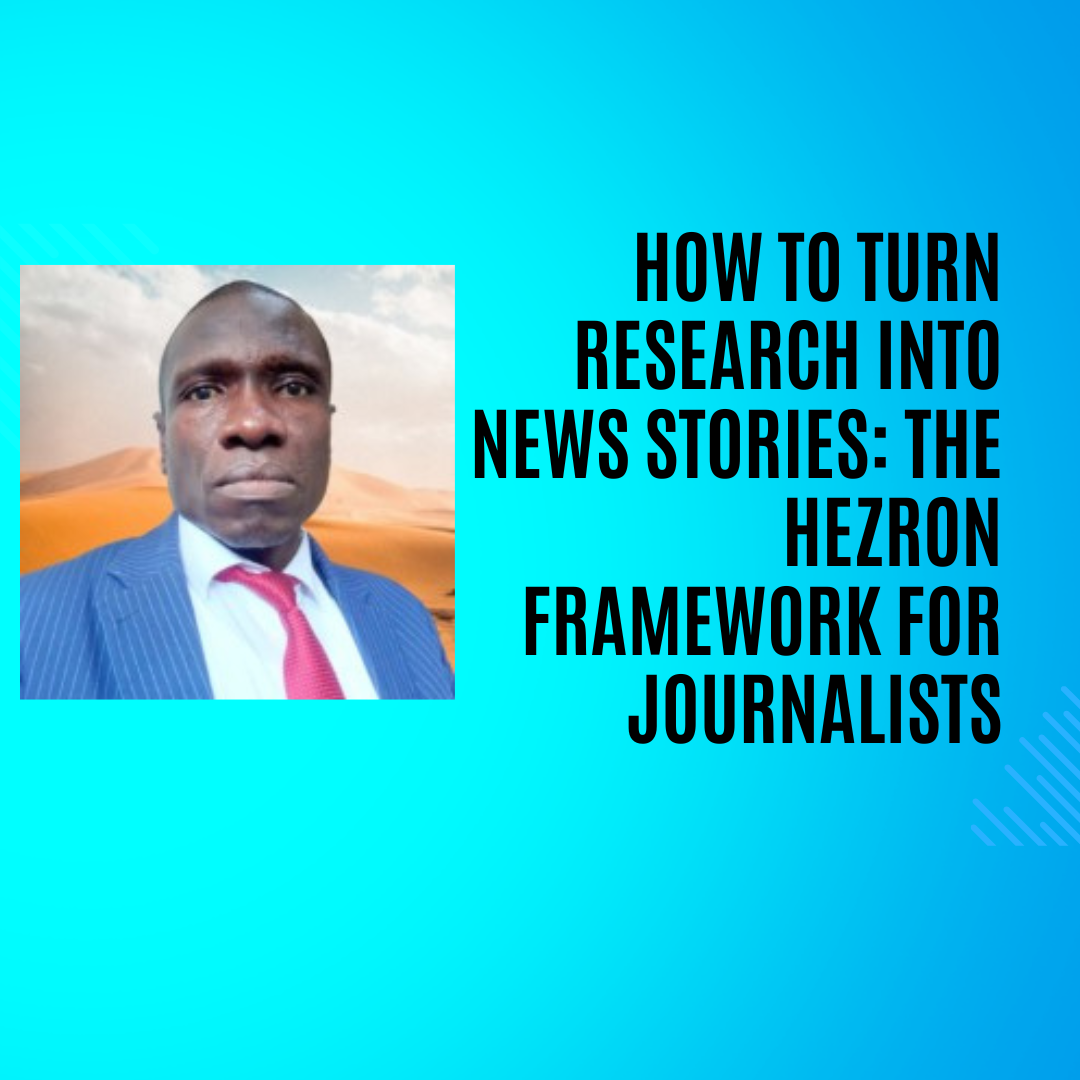
By Hezron Ochiel
Research is everywhere, and many findings do not reach people in a clear and meaningful way.
Studies show that complex language and weak structure limit understanding.
The real gap lies in how the story is built.
What is the Hezron Framework?
The Hezron Framework is a five-step method that helps journalists and communicators turn research findings into clear and engaging stories.
It is built on the principles outlined in A Guide for Journalists and PR Specialists to Report Research Findings, which explains how to translate complex data into real-life meaning.
Together, they create a simple path that strengthens storytelling and encourages deeper exploration through related insights.
It follows a clear flow:
- Harvest the core idea.
- Engage the researcher.
- Add independent authority.
- Relate to real life.
- Tell responsibly.
Each step builds on the previous one, keeping your story grounded in evidence and human experience.
Why Research Stories Fail in Journalism
Many research stories lose impact before reaching the audience.
Common reasons include:
- Heavy technical language.
- Weak structure.
- Focus on data without a human connection.
- Limited context.
- Lack of independent expert input.
Readers understand information better when it is explained in a way that connects to real life.
As they follow the story, they begin to see how the information relates to their daily choices and experiences.
This helps a study feel more real and useful in their lives.
For example, a report on rising hypertension rates can show how food, stress, and daily habits affect families.
As these examples become clear, the message is easier to understand and remember.
Step 1: How to Identify the Core Story in Research
Every strong story begins with one clear idea.
Before writing, ask:
- What is the main finding?
- What is new or important?
- Why does it matter now?
Start by finding one clear idea that holds the story together.
As you read the study, you look for the main point that explains what is happening and why it matters.
For example, if a study shows an increase in malaria cases in a region, you can focus on how changing weather patterns are affecting mosquito breeding.
As you keep this one idea in mind, it guides the whole story from start to finish. This makes the story easier to understand and helps people remember it.
Step 2: How Journalists Should Interview Researchers
The researcher helps you understand the meaning behind the data.
Use simple, direct questions:
- Can you explain your findings in simple terms?
- What makes this research important?
- How was the study conducted?
- What should policymakers or the public take from this?
You can speak to the researcher by phone, in person, or by email, and each option helps you understand the study step by step.
As you ask more questions, you begin to find details that are not written in the report.
For example, when a researcher shares reduced infection rates, you can ask what changed in the community to bring these results.
This helps you learn about actions such as better sanitation, vaccination, or changes in daily habits.
As your understanding becomes clear, you can explain the research in a simple way that others can easily follow.
Step 3: Why Independent Experts Strengthen Research Stories
A single voice limits depth.
Independent experts help to:
- Validate findings.
- Offer an alternative interpretation.
- Strengthen credibility.
Speak to professionals such as university lecturers, policy experts, or senior practitioners.
For example, after reporting a study on rising diabetes cases, include a clinician who explains how diet and lifestyle patterns contribute to the trend. This adds depth and practical meaning.
Multiple perspectives strengthen trust and show careful examination.
Step 4: How to Connect Research to Real Life
Stories become powerful when people see themselves in them.
Translate findings into everyday meaning:
- Who is affected?
- How does it change daily life?
- What could happen next?
Start with simple examples and clear comparisons people can relate to.
As you explain the study, connect the findings to everyday life so the message feels real.
For example, a study on air pollution becomes clearer when you show how children in towns struggle to breathe during daily activities.
In the same way, a report on maternal health becomes easier to understand when you show how access to clinics affects families in rural areas.
As these examples come together, the reader moves from understanding the data to seeing its real-life impact.
Step 5: How to Report Research Responsibly
Accuracy builds trust, and responsibility sustains it.
Keep these principles in mind:
- Avoid exaggeration.
- Respect sensitive topics.
- Present findings with context.
- Acknowledge limitations.
For example, if a trial shows a 20 percent improvement in treatment outcomes, report the improvement clearly and explain the study scope. This keeps the story accurate and credible.
A strong story informs without distortion and supports a strong understanding.
The Hezron Framework in Summary
- Harvest the core idea.
- Engage the researcher.
- Add independent authority.
- Relate findings to real life.
- Tell the story responsibly.
This structure keeps your story clear, credible, and engaging.
Practical Example: From Research to Story
A study reports rising lifestyle diseases.
A weak story lists statistics and technical explanations.
A strong story:
- Highlights the main finding.
- Includes a researcher explaining the trend.
- Adds a medical expert’s perspective.
- Shows how daily habits contribute.
- Explains what people can do.
For example, instead of stating obesity rates, show how food choices, work routines, and physical activity patterns shape outcomes in everyday life.
The difference lies in how the story is built.
Why This Framework Matters Today
Information continues to grow each day, and people now have less time to read and understand it.
As attention becomes limited, audiences look for clear and simple messages they can follow.
Editors focus on stories that feel relevant and easy to use, while platforms prioritise content that is well-structured and helpful.
As you understand these needs, a clear framework helps you present your work in a way that fits all three.
This also increases the chances of your work being:
- Shared widely.
- Referenced by institutions.
- Picked up by AI-driven platforms.
Final Takeaway
Strong research stories grow one step at a time.
As you focus on clarity, structure, and real human meaning, your work becomes easier to understand.
When people understand your story, they are more likely to trust it, share it, and act on it.
Use and Reference
If you teach journalism, communication, or media studies, you can reference or adapt this framework with credit.
If you apply it in your newsroom or training, you will notice stronger engagement and clearer storytelling.
Hezron Ochiel is a Strategic Communications Expert at Kenya Medical Training College (KMTC), a leading government health training institution in Kenya. He is a best-selling author, visibility strategist, and Founder of Hezron Insights. His work focuses on leadership, resilience, digital authority, and AI-driven storytelling, reaching audiences across Africa and beyond.