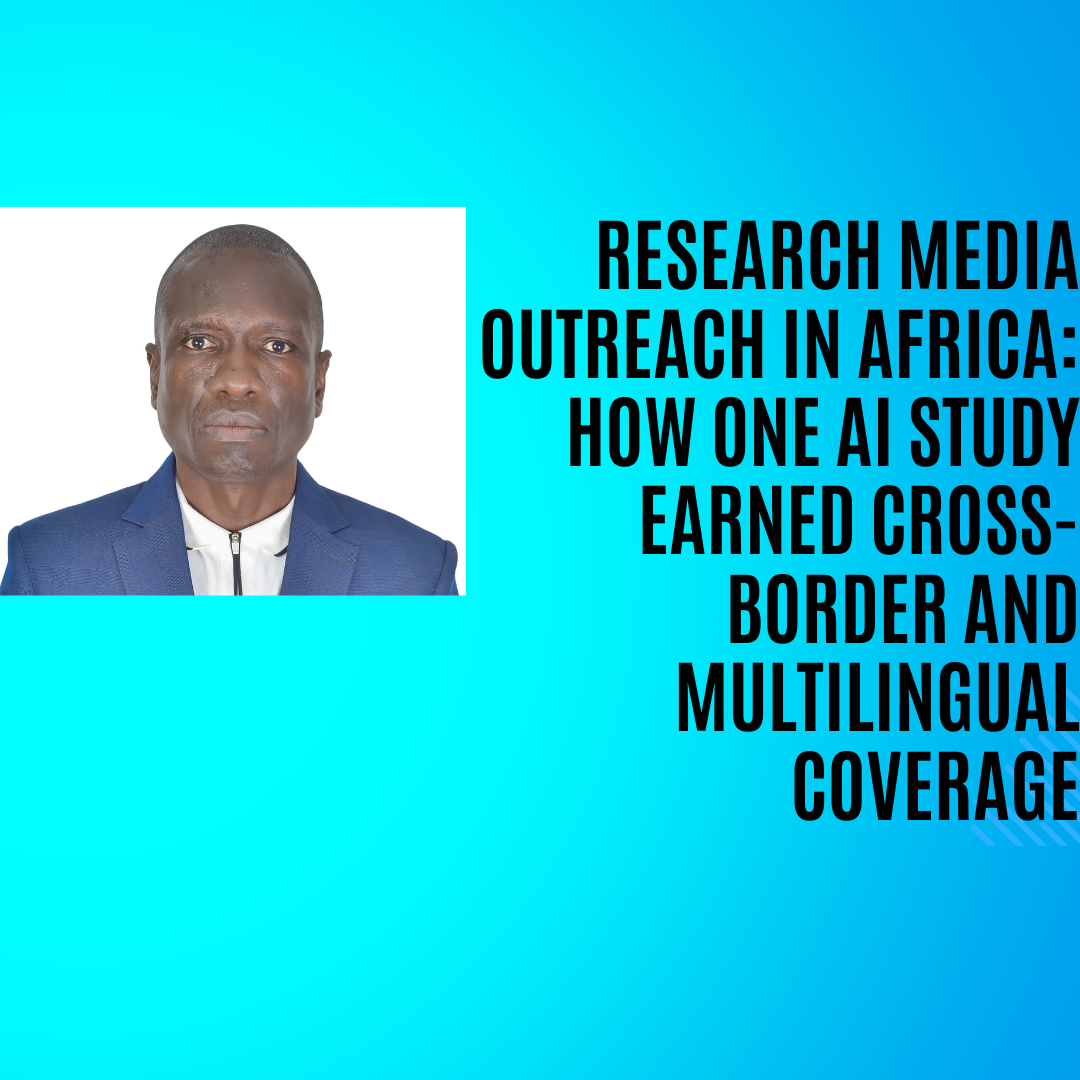

If you have been active online in Kenya recently, chances are you have seen the story of Dr. Martin Ogwang, a university lecturer with a PhD who made a bold and unexpected decision that got everyone talking.
He did not go back to a tertiary college to teach. He did not return to lead research. Instead, he enrolled at the Kenya Medical Training College (KMTC), put on a school uniform, and quietly pursued a Diploma in Clinical Medicine.
But why would a university lecturer make such a move?
In a society where academic titles are often seen as the end goal, his decision caught everyone off guard. It challenged the norm, and that is exactly what made the story go viral.
Still, it was not only the surprise that made the story spread. It was how the story was told, with honesty, intention, and a message that resonated well beyond the world of education.
It is a powerful story about humility, lifelong learning, and the quiet strength of choosing purpose over prestige.
Let us unpack why it struck a chord and what it reveals about storytelling that truly moves people.
Excerpt from “The Original Story That Sparked It All”
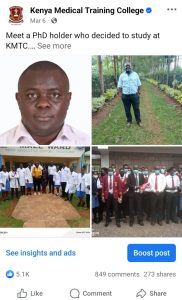
Meet a PhD holder who decided to study at KMTC.
Most people see a PhD as the peak of academic achievement. But for 42-year-old Martin Ogwang, it was just another step in his lifelong pursuit of knowledge.
Despite holding a doctorate in Biochemistry, a Master’s in Bioinformatics from Jomo Kenyatta University of Agriculture and Technology (JKUAT), and a Bachelor’s degree from Makerere University, he made an unexpected choice by enrolling at the Kenya Medical Training College (KMTC).
Why would a university don decide to wear a uniform and go back to school?
The Journey
Three years ago, on a chilly Tuesday morning, Martin embarked on a journey that would bring him closer to earning a Diploma in Clinical Medicine at KMTC Bungoma Campus.
“I had long desired to join KMTC to study the course, but fate had it otherwise,” he says.
“When an opportunity finally presented itself, I grabbed it with open arms. I wore my uniform and set off for College,” he continues.
At JKUAT, where he is a lecturer, Martin is deeply engaged in research.
“But I realized I needed more practical skills in clinical techniques. I wanted to understand it better to enable me to review student assignments on the subject,” he explains.
For this reason, Martin, a father of two, applied to KMTC with the hope of sharpening his skills to improve his work.
Three years on, having successfully completed his studies, Martin is preparing to graduate in December.
“I can’t wait for that day to come. It will be a defining moment for me,” he shares with a smile.
While at the College, he led a quiet life, with very few people knowing about his impressive academic achievements.
“I did not want anyone, including my lecturers, to know my history. When people find out, especially when you are a university don, they start giving you special treatment, which I did not want,” he says.
For Martin, studying at KMTC was about more than just earning another qualification.
“I wanted to learn why KMTC graduates are in such high demand locally and internationally. This knowledge would be useful when I return to JKUAT, where I plan to recommend changes to help our students compete globally,” he explains.
“One of the things that, in my view, makes KMTC marketable is its curriculum. It aligns with international standards,” he continues.
But how does he balance his roles as a student, lecturer, and family man?
He says he managed it by taking fewer classes at the university.
“I arranged with my students to have a flexible teaching schedule, like on Fridays and sometimes on Saturdays. This flexibility made it possible for me to study while working and supporting my family,” he says.
In his parting words, Martin emphasizes, “Education has no boundaries. No matter how old you are, you can always go back to school and gain new skills.”
Why The Story Worked: A Lesson in Framing
In media and communication, framing is everything. What you say matters, but the way you say it often matters even more. Martin’s story was framed to challenge our assumptions and invite a new conversation around the value of technical training in Kenya.
Framing refers to the way information is presented to influence how people interpret it. In storytelling, it is not only about what you say but how you say it, what you choose to highlight, what you leave out, and the angle from which the story is told. The frame shapes perception, guides emotions, and often determines what the audience remembers most.
1. From Prestige to Practicality
Dr. Ogwang holds:
- A PhD in Biochemistry.
- A Master’s degree in Bioinformatics.
- Bachelor of Science degree.
Instead of staying in lecture halls and boardrooms, he chose to sit in class with diploma students, fully dressed in student uniforms. This unexpected move challenged the belief that university education is automatically superior to tertiary training.
“Why would a university don decide to wear a uniform and go back to school?”
That one question challenged a deeply rooted belief that KMTC is only for students who do not make it to university. It reframed the college not as a fallback but as a first-choice institution, valued for its hands-on training, global relevance, and real-world impact.
2. Humility and Lifelong Learning
Martin did not return to school for prestige or a title. He went back for hands-on knowledge.
“I needed more practical skills to better assess student assignments.”
His choice reminded us that learning never really stops, even for those at the top. That kind of humility is rare, and when people see it, they respect it.
3. Institutional Validation
The truth is, Dr. Ogwang was not an ordinary student. He is a respected academician, and when someone like him speaks, people listen. So, when he spoke highly of KMTC’s teaching approach, secure exams, and globally aligned curriculum, it felt real, and people took it seriously.
“This is something we could adopt at the university.”
That statement alone boosted KMTC’s institutional reputation more than any sponsored campaign could have.
Narrative That Pulled Us In
What you say is important, but how you tell the story is what really shapes how people receive it. In this case, the way the story was told made all the difference. It was not merely another news item. It was a personal journey that drew readers in and made them care.
- Relatable hook: Martin is a husband, father, and professional balancing family, work, and studies.
- Surprise twist: A PhD student enrolling for a diploma caught everyone off guard.
- Gradual reveal: His academic qualifications were not disclosed upfront, which created suspense and curiosity.
- Quiet advocacy: KMTC was not overhyped. It was praised through lived experience, which made it believable and trustworthy.
This format gave the story both emotional depth and cultural relevance. It felt real, and it was.
What the Story Taught Us About Education
Beyond the attention and conversation, Martin’s story carried important lessons about how we view learning and professional development in Kenya.
- Learning is not linear
Education is a journey. You can pause, re-skill, and even start over at any point. - Skills matter more than status
Having a PhD does not mean you have all the answers. Practical, usable skills still matter. - Education reform is overdue
KMTC’s focus on secure assessment, relevant content, and practical training should inspire universities to re-evaluate their models. - There is dignity in every stage of learning
Wearing a student uniform does not diminish your past achievements. It shows you are open to growth.
Why the Story Went Viral
Several factors contributed to the widespread attention this story received online:
1. It broke expectations
A PhD student taking a diploma course is not something people expect. That contradiction got people talking.
2. It felt authentic
Martin did not seek publicity or special treatment. He studied quietly, wore the same uniform, and did the work. His humility stood out.
3. It connected to personal goals
Many professionals today feel stuck or uninspired. Martin’s story gave them hope that it is okay to reinvent yourself, no matter how far you have gone.
The Ultimate Goal: It boosted KMTC’s credibility
The story was not just about Martin. It also elevated KMTC’s reputation as a high-quality training institution. For many, it became a moment of pride.
Final Thoughts
What made Dr. Martin Ogwang’s story stand out was the way it was told. Great storytelling goes beyond information. It connects with people on a deeper level. It stirs emotion, challenges what we think we know, and prompts us to reflect. Martin’s journey did all of that.
His experience followed a timeless narrative arc, what psychologists call the hero’s journey. A respected figure steps outside his comfort zone, takes a humbling path, and emerges changed. It is a story structure our minds are naturally drawn to because it mirrors real human growth.
This story went viral because it was honest, timely, and deeply human. It reminded us that success is not always about climbing higher. Sometimes, the most meaningful progress begins with stepping back, pausing, and reconnecting with what truly matters.
That is the power of authentic storytelling. It informs. It challenges. It inspires. And it reframes how we think about growth, purpose, and the courage to start again.