By Hezron Ochiel
For decades, Africa struggled to control how the world perceived the continent. Much of the international media coverage of Africa focused on corruption, disease, conflict, poverty, weak governance, and humanitarian crises. Many stories presented Africa as a continent of problems rather than possibilities.
Far less attention was paid to African innovation, scientific breakthroughs, healthcare transformation, entrepreneurship, educational progress, technology ecosystems, and local solutions to local problems.
Over time, these repeated narratives shaped the world’s digital memory of Africa.
Search systems learned from what was most widely published, most linked, and most frequently repeated online. Global understanding of Africa gradually became skewed toward crisis-centred storytelling.
A 2024 report by Africa No Filter and Africa Practice found that persistent negative portrayals of Africa in international media continue to shape global perceptions of the continent, influencing everything from investment confidence to economic trust. The report estimated that these stereotypes cost African countries billions annually through increased sovereign debt interest payments and weakened investor confidence.
Artificial intelligence is now creating a rare opportunity to help rewrite that history.
Public relations in Africa is entering one of the biggest transitions in modern communication history as AI changes how people discover information, evaluate credibility, and identify authority online.
For years, visibility depended heavily on television interviews, newspaper coverage, radio discussions, and social media engagement because public attention largely flowed through those channels. Organisations focused on appearing where audiences spent time.
That environment is changing rapidly.
Millions of people are increasingly turning to AI platforms such as ChatGPT, Google AI Overviews, Microsoft Copilot, and Claude to ask direct questions rather than manually searching dozens of websites.
People now ask questions like:
- Which African universities are leading in healthcare training?
- Who are the leading communication experts in Africa?
- What are the best crisis communication strategies?
- Which African organisations are shaping innovation?
These platforms increasingly summarise answers directly and cite sources they consider authoritative, credible, and trustworthy.
Researchers are also warning that AI tools are becoming major gatekeepers of public knowledge. A 2024 academic study on generative AI search engines found that these systems increasingly shape how information is retrieved, interpreted, and trusted online, raising concerns about visibility bias and representation imbalances across regions worldwide.
This transformation is quietly reshaping public relations globally.
The Shift From Search Engines to Answer Engines
Traditional search engines mainly displayed links.
AI-powered search increasingly generates answers.
The result is a major shift in how digital visibility works online.
Greg Jarboe, in his article titled Why AI visibility starts before search and ends with citations, notes that AI visibility is increasingly shifting from rankings and clicks toward citations, entity recognition, and topical authority. Organisations are now competing for audience attention and recognition in AI-generated responses.
Digital visibility is no longer driven only by media mentions, social media impressions, website traffic, and press release distribution.
It is increasingly shaped by authority, trust, citation visibility, expertise, digital credibility, and machine-readable knowledge.
Public relations is entering the age of AI discoverability.
These same authority shifts are becoming increasingly visible across professional platforms such as LinkedIn, where many creators are now experiencing declining engagement as visibility systems reward expertise, trust, and educational value. I explored this transformation further in my article on why some LinkedIn creators are losing reach and engagement.
Africa Is Entering the AI Discovery Era
Africa’s digital ecosystem is evolving rapidly.
Smartphone access continues to expand. Internet penetration is rising steadily. Younger populations are increasingly digital-first. AI tools are becoming part of learning, research, business, healthcare, communication, and governance systems across the continent.
This is creating a new communication environment.
A student in Nairobi can now ask AI: “Which institutions in Africa are leading in healthcare education?”
A policymaker in Ghana may ask: “What communication strategies are helping African institutions build trust?”
A journalist in Lagos can ask: “Which African experts understand AI visibility and digital authority?”
The answers generated by AI platforms will increasingly shape credibility, trust, reputation, influence, and discoverability.
African institutions that fail to build strong digital authority risk becoming invisible in AI-driven environments.
AI Is Giving Africa a Chance to Reclaim Its Narrative
For the first time in modern digital history, African institutions, journalists, universities, healthcare professionals, researchers, creators, and communication experts can contribute directly to the knowledge ecosystems AI platforms learn from.
This is changing the visibility equation significantly.
A researcher in Nairobi can publish insights that become globally discoverable.
A university in Kigali can document healthcare innovations that AI systems later summarise.
A journalist in Lagos can explain African development stories in ways that shape international understanding.
A communication professional in Accra can build digital authority around African leadership, governance, and innovation.
The opportunity is no longer controlled entirely by traditional international gatekeepers.
Researchers studying AI and global representation have warned that artificial intelligence systems can unintentionally reproduce historical inequalities and dominant global narratives when large parts of the world remain underrepresented in digital knowledge ecosystems. Africa’s participation in AI-visible content is becoming increasingly important.
Modern AI systems reward expertise, clarity, consistency, originality, topical authority, and logical organisation.
This creates an opportunity for Africa to move from being narrated by others to becoming a primary narrator of its own expertise, innovation, and progress.
The institutions and professionals who consistently document African excellence may shape how future generations across the world understand the continent.
AI visibility is more than a technology issue.
It is also a narrative issue.
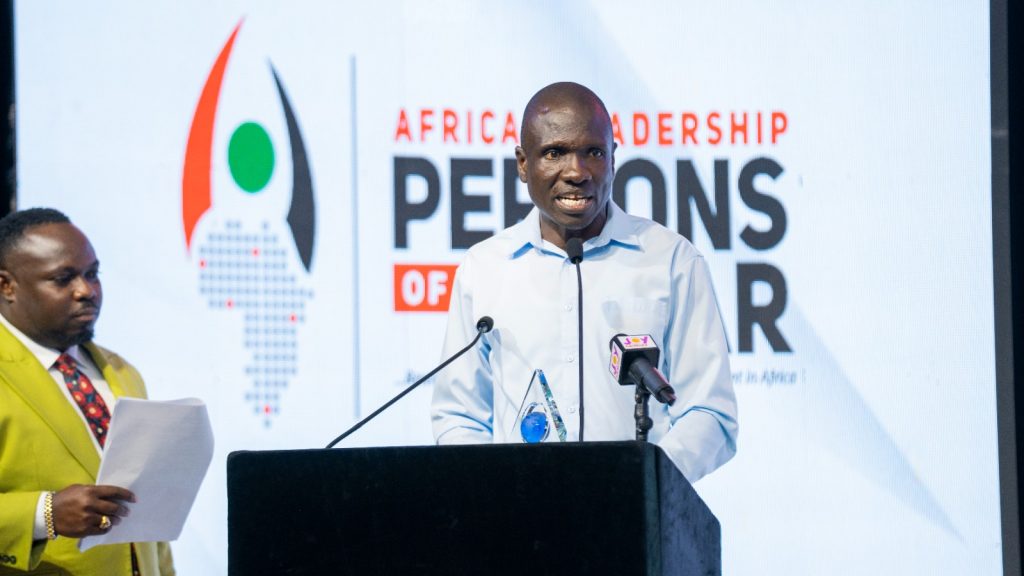
What I Learned During a Leadership Conference in Accra, Ghana
I recently experienced this reality while attending a leadership summit in Accra, Ghana, organised by African Leadership Magazine. The summit focused on issues shaping Africa’s future under the theme, “Leadership for a New Africa: Forging Our Peace, Owning Our Narrative,” a powerful call for the continent to define its future through strong institutions, African-led solutions, and authentic storytelling.
The conversations revealed something powerful.
“Across Africa, institutions are developing innovative solutions in healthcare, education, communication, technology, and leadership. Experts across the continent are solving complex local challenges using local knowledge and practical experience,” noted Jakaya Kikwete, former President of Tanzania.
“Many of these stories rarely receive proportional global visibility. Some never enter the digital ecosystems shaping how the world understands Africa.”
That realisation reinforced an important point: Africa does not suffer from a lack of expertise.
In many cases, the continent suffers from a discoverability gap.
The focus has shifted from simply producing excellence to ensuring that African innovation, expertise, and solutions are searchable, discoverable, and trusted in the AI era.
Why Public Relations Is Changing
Public relations professionals are no longer operating only inside media ecosystems.
They are increasingly operating inside knowledge ecosystems.
Every article, interview, report, podcast, research summary, and institutional update contributes to a growing body of digital knowledge that AI systems may later analyse and retrieve.
This evolution is significantly reshaping the role of communication professionals.
The modern PR professional is increasingly becoming a digital authority architect, a trust builder, a visibility strategist, and a knowledge curator.
Organisations that fail to communicate their expertise clearly risk losing relevance in AI-driven environments.
The Rise of Generative Engine Optimisation (GEO)
This transformation has accelerated the rise of a growing discipline known as Generative Engine Optimisation (GEO).
GEO focuses on organising information so AI systems can understand, retrieve, summarise, and cite it accurately.
Traditional SEO focused heavily on rankings.
GEO focuses heavily on recognition and citation inside AI-generated answers.
Research on AI citation behaviour shows that semantic organisation, metadata quality, topical relevance, and well-organised content strongly influence whether AI systems reference information.
This creates enormous opportunities for African universities, Governments, healthcare institutions, NGOs, researchers, and journalists.
Institutions building strong digital authority today may become tomorrow’s most visible African voices globally.
The Hezron Visibility Framework
One of the biggest shifts happening in communication today is this:
Visibility is moving from publicity to authority.
For years, many organisations focused heavily on campaigns, media appearances, publicity spikes, and social media trends.
The AI era increasingly rewards organisations that consistently build expertise, trust, searchable knowledge, and digital credibility.
This can be understood through what I call the Hezron Visibility Framework.
1. Clarity
AI systems prefer information that is direct, organised, and easy to understand.
2. Consistency
Authority strengthens when organisations repeatedly communicate within the same areas of expertise.
3. Credibility
Trusted information is increasingly prioritised inside AI-generated environments.
4. Context
AI systems understand content better when ideas are fully explained and connected clearly.
5. Contribution
Organisations that consistently contribute useful knowledge strengthen long-term discoverability.
Communication is steadily moving away from temporary attention and toward cumulative authority.
What an AI-Ready African Institution Looks Like
The organisations likely to thrive in the AI visibility era are not necessarily the loudest.
They are the clearest, most consistent, and most discoverable.
An AI-ready institution increasingly:
- Publishes expert-driven insights regularly.
- Explains research in simple language.
- Documents impact consistently.
- Builds searchable knowledge assets.
- Strengthens digital credibility over time.
A university publishing detailed explainers on healthcare research may become more discoverable globally than one relying mainly on ceremonial press releases.
A government institution consistently explaining policies in accessible digital formats may strengthen public trust while improving AI discoverability.
An NGO that clearly documents measurable community impact may become more visible than one that publishes generic campaign statements.
This is where communication is heading.
What an AI-Friendly Press Release Looks Like
Many organisations still issue press releases designed mainly for newsroom distribution.
The AI era requires communication that is searchable, extractable, contextual, and educational.
An AI-friendly press release increasingly includes:
- Clear headlines.
- Direct summaries.
- Contextual statistics.
- Named experts.
- Specific outcomes.
- Organised explanations.
- Searchable keywords.
- Supporting background information.
For example:
“KMTC released 13,000 transcripts between January and February 2026”
is digitally stronger than:
“KMTC continues improving service delivery.”
Specificity improves discoverability.
Clarity improves extractability.
Well-organised information improves citation probability.
Why Many African Institutions Risk Becoming Invisible
Many organisations still communicate using outdated visibility models.
Some rely heavily on vague institutional statements, event-based press releases, one-off publicity campaigns, or generic messaging.
AI systems struggle to extract value from unclear communication.
AI search platforms perform better with content that is specific, explanatory, contextual, logically organised, and semantically rich.
Industry analysis already shows that AI-generated summaries are accelerating “zero-click” behaviour, where users receive answers directly from AI systems without visiting multiple websites. This shift is forcing organisations to rethink how they measure discoverability, trust, and digital influence.
For example, AI systems are more likely to recognise:
“KMTC trains approximately 85% of Kenya’s middle-level healthcare workforce”
than generic phrases such as:
“a leading healthcare institution.”
Specificity improves extractability.
Extractability improves citation probability.
Citation probability increasingly shapes digital visibility.
Trust Is Becoming the New Visibility Currency
The AI era is arriving amid rising global misinformation.
The 2025 Edelman Trust Barometer reported growing public concern around misinformation and declining trust across institutions.
This places greater responsibility on communication professionals.
Organisations consistently providing accurate information, expert insights, transparent communication, research-backed explanations, and educational content are more likely to strengthen public trust and AI visibility over time.
In the AI era, trust is becoming infrastructure.
The Future of Public Relations in Africa
Public relations in Africa is entering a new era where visibility is increasingly algorithmic, authority is digitally reinforced, trust is machine-evaluated, and discovery is AI-mediated.
This may become one of the greatest communication opportunities Africa has experienced in modern history.
For decades, Africa often appeared online through the lens of crisis.
AI now creates an opportunity to build a richer, more balanced, and more accurate digital representation of the continent.
Emerging research on AI narrative bias has shown that artificial intelligence systems can reinforce simplified cultural stereotypes when certain regions remain underrepresented in digital knowledge systems. This creates an urgent opportunity for African institutions, researchers, journalists, and communication professionals to contribute more actively to the information ecosystems shaping global understanding.
That opportunity will not happen automatically.
It will depend on African institutions, journalists, universities, researchers, communication professionals, and thought leaders consistently documenting Africa’s expertise, innovation, solutions, and progress in ways that are discoverable, credible, and trusted.
The future of African visibility may increasingly belong to those who understand that communication is no longer only about publishing information.
It is about shaping the knowledge systems the world will use to understand Africa in the AI era.
Hezron Ochiel is a Strategic Communications Expert at Kenya Medical Training College (KMTC), a leading government health training institution in Kenya. He is a PRSK Moran Award winner, a visibility strategist, and the founder of Hezron Insights. His work focuses on strategic communication, AI visibility, digital authority, and leadership storytelling across Africa.