By Hezron Ochiel
The internet has changed where Kenyans can look for work.
A professional in Kenya can now provide a service to a client thousands of kilometres away without ever meeting them physically. I experienced this shift early in my career.
After college, I spent nearly two years trying to secure an entry-level opportunity in journalism. Bills still had to be paid, so I turned to online writing.
Armed with a desktop computer and internet bundles, I began taking freelance assignments from clients I had never met. One of my early jobs involved writing a 1,000-word article analysing the economic situation in Africa, for which I was paid about $50 per article.
At the time, online writing was mainly a way to earn income while I continued searching for a journalism opportunity. The work also kept me writing, strengthened my research skills and helped prepare me for the career I was trying to build.
I tell that story in more detail in Unemployed After College: How Online Writing Helped Launch My Journalism Career.
That experience taught me something I still believe today:
Digital work does not remove the need for skills. It changes where those skills can be sold.
Online work has widened the labour market
Digital platforms have expanded the reach of work beyond location.
A writer in Kenya can now serve a client in another country and deliver the work online. The same shift is visible across many African markets, where digital platforms are making it easier for professionals to reach clients beyond national borders.
That creates a larger market for people with useful skills.
Access alone is not enough. Freelancers still need competence, reliability and the ability to earn client trust.
The internet opens the market, while the value you offer determines what happens next.
Freelancing works best when treated as professional work
Freelancing is sometimes presented as an easy route to online income.
My experience taught me to approach it as professional service delivery.
Clients expect deadlines to be met, work to be done well, and communication to be clear. A freelancer therefore needs to understand the problem they solve and why a client should trust them to solve it.
Three questions matter: What can I do well? Who needs it? Why should they trust me to deliver?
Freelancing becomes more sustainable when you build a professional reputation around a useful skill.
Skills are becoming even more important
The digital labour market is changing quickly.
AI, data and digital platforms are reshaping the skills employers and clients expect.
I saw this clearly when I analysed 948 communication jobs.
In that sample, employers increasingly asked for digital, data, AI, measurement and strategic capabilities alongside traditional communication skills.
For someone considering online work in Kenya, the lesson is practical: Keep developing skills that make you useful when opportunities appear.
A platform may connect you to a client. Your expertise determines whether the relationship continues.
Your skills can become a business
Freelancing can also change how professionals think about what they know.
A skill that begins as side income can gradually become a specialised service, consultancy or knowledge business.
A communication professional, for example, may turn years of experience into training or advisory services.
I explore that progression further in How to Turn Your Career Experience into a Knowledge Business.
The principle is simple: Your experience becomes more valuable when you organise it around a problem someone is willing to pay you to solve.
Relationships still matter in digital work
Technology makes it easier to connect with clients and employers across borders, while trust determines whether those connections become opportunities.
My own career provides a useful example. Freelancing helped me continue developing my writing skills, and a professional relationship later connected me with an opportunity at The New Humanitarian, where I went on to work as a stringer.
The freelance work strengthened my ability, while the relationship created access to an opportunity.
Digital visibility attracts attention. Professional credibility helps convert that attention into opportunity.
For online professionals, this means doing good work, communicating reliably and making evidence of your expertise easy to find.
What online work means for young professionals in Kenya
For someone entering the job market, online work can provide another route into professional life.
When taking on freelance work, pay attention to what the experience is helping you build beyond the immediate income.
A good assignment can strengthen your expertise, expand your portfolio and give future clients evidence of what you can do.
That was my experience with online writing, which became part of my preparation for journalism and later strategic communication.
The future of work will require adaptability
Technology will continue changing how work is found, delivered and valued.
Roles will evolve, and professionals will need to keep strengthening their skills as new tools and expectations emerge.
For professionals in Kenya and across Africa, the bigger opportunity lies in turning digital access into useful skills, trusted services and visible expertise.
Online work expands the market in which Kenyan professionals can compete. Skills, reputation and consistent delivery determine how far they can go within that market.
For me, freelance writing started as a way to survive a difficult period after college and became a foundation of my career.
That is why I see online work as more than a source of immediate income. It can become a practical place to build expertise, credibility and a body of work that prepares you for the next opportunity.
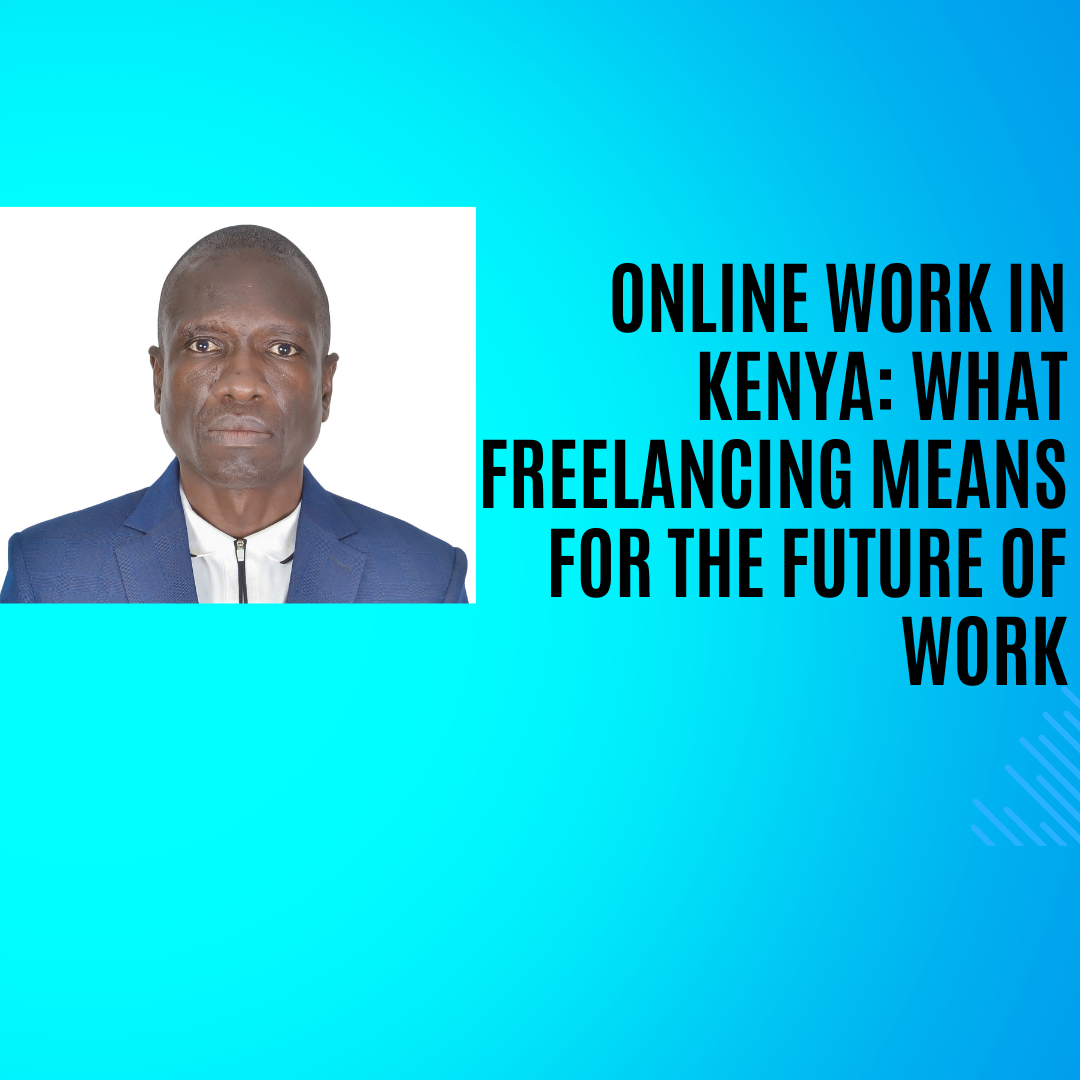
Hezron Ochiel is an award-winning strategic communications and public relations professional with over 15 years of experience in media, digital communication and reputation strategy. He serves as the Deputy Corporate Communications Manager at the government-owned Kenya Medical Training College (KMTC) and is the founder of Hezron Insights, where he writes about AI visibility, Digital PR, SEO, GEO and digital authority. His work has appeared on platforms including Reuters, The New Humanitarian and The Standard.