
The AI company’s search for a highly paid human writer reveals how technology is changing the value of communication expertise and the skills employers need.
By Hezron Ochiel
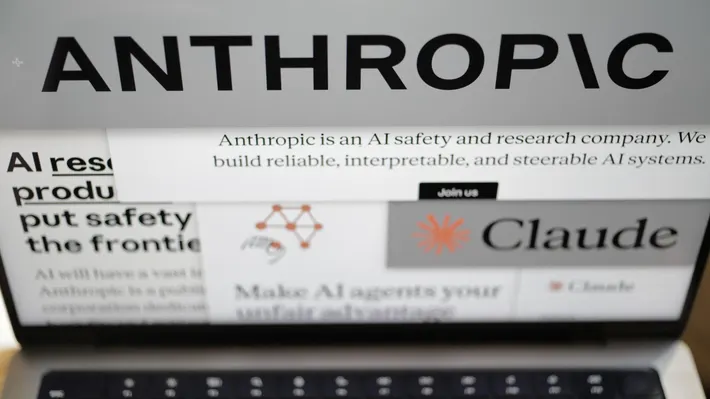
Anthropic, the company behind the Claude artificial intelligence assistant, is looking for a human writer. It is offering up to $345,000 a year.
The Executive Communications Writer position, advertised in early September 2026, pays $295,000 to $345,000 annually and is based in San Francisco or New York.
To appreciate how extraordinary that figure is, consider what American writers ordinarily earn.
According to the US Bureau of Labor Statistics, writers and authors earned a median annual salary of $76,910 in May 2025. Public relations managers earned $146,910.
Anthropic’s maximum offer is approximately 4.5 times the median writer’s salary and 2.3 times that of a public relations manager.
These national figures are not direct comparisons with senior executive-writing positions in major technology companies, but they illustrate the size of the offer.
For a company developing technology that can produce sophisticated written content within seconds, the recruitment raises an interesting question: why is it willing to pay so much for a human writer?
The answer offers useful insights into the future of communication work.
Why Anthropic is hiring a human writer
Anthropic wants someone with at least eight years of experience in executive communication.
The successful candidate will prepare speeches for senior leaders, explain complex developments in artificial intelligence and help the company respond to breaking news.
Consider a situation in which Anthropic must address public concerns about the safety of its technology.
Its response needs to be accurate, supported by evidence and sensitive to the concerns of customers and regulators. A poorly considered statement could undermine public confidence and damage important relationships.
The writer must understand the organisation’s position, recognise potential risks and advise its leadership.
Ann Handley, chief content officer at MarketingProfs and author of Everybody Writes, highlighted the importance of human judgement in an interview with Business Insider published on 21 October.
Joseph Braue, executive editor at Content Marketing Partners, told the same publication that experienced corporate writers must be prepared to question unsupported claims and challenge executives when necessary.
Their observations help explain why Anthropic is seeking an experienced communication professional.
Such a person contributes to decisions that shape how the company presents itself to the world.
Is AI replacing writing jobs?
The wider employment picture deserves attention.
In August 2026, Stanford University researchers Erik Brynjolfsson, Bharat Chandar and Ruyu Chen published updated findings from their study, Canaries in the Coal Mine? Six Facts About the Recent Employment Effects of Artificial Intelligence.
Using US payroll data, they found that employment among workers aged 22 to 25 in highly AI-exposed occupations was approximately 19 per cent below the level suggested by employment trends among similarly aged workers in less-exposed occupations.
Experienced workers showed no comparable gap, and the researchers found no evidence of widespread economy-wide displacement.
The study does not establish that AI alone caused the difference. Its findings nevertheless raise an important question about professional development.
Junior communication professionals traditionally gain experience by researching speeches, drafting announcements and editing content. These assignments help them understand organisations and develop professional judgement.
AI can now assist with much of this work.
As organisations adopt these tools, they will need to consider how younger employees can acquire the experience required for senior positions.
After all, the writer Anthropic is seeking must have started somewhere.
Why Google is paying for human-produced content
Another development in the AI industry offers a useful perspective.
On 15 October 2026, Google announced that more than 400 publications worldwide were participating in its News AI pilot programme.
They include CNN, Axios, the Financial Times and Forbes.
Under the initiative, Google pays participating publishers for licensed content used in AI-powered news features, including article overviews and personalised audio briefings. The financial terms remain undisclosed.
The arrangement involves content licensing rather than employing individual writers to train AI models. It demonstrates the commercial value of professionally produced information.
Consider investigative journalism.
An AI system can summarise an investigation within seconds. The original reporting may have required months of interviewing sources, examining documents and verifying allegations.
That work produces the evidence on which credible reporting depends.
As Reuters reported, publishers are increasingly exploring commercial arrangements with AI companies while seeking to protect the value of their original journalism.
Communication professionals face a related challenge: demonstrating the expertise and value behind their work.
What skills will writers need in the age of AI?
Anthropic’s recruitment offers four practical lessons for writers, journalists and public relations professionals.
1. Develop specialist expertise.
Writing becomes more valuable when combined with a strong understanding of a particular field.
A communication professional who understands healthcare, for example, can interpret complex information and help an institution communicate responsibly.
2. Strengthen strategic judgement.
Learn to evaluate evidence, recognise reputational risks and advise leaders when a proposed message needs reconsideration.
These capabilities are particularly important when communication decisions carry serious consequences.
3. Use AI and demonstrate your impact.
AI can support research, drafting, and analysis, freeing professionals to spend more time on work that requires deeper thinking.
Josh Bernoff, a business-writing author and former Forrester executive, told Business Insider that professional writers should demonstrate how their work influences business decisions.
Consider how your communication contributes to stakeholder understanding, trust and organisational performance.
4. Make your expertise discoverable and verifiable.
This is particularly important for African professionals seeking opportunities beyond their immediate networks.
Someone may have considerable experience, but can a potential employer or collaborator easily find credible evidence of that expertise?
Publishing original analysis, documenting achievements and maintaining an authoritative professional profile can help.
As an AI visibility strategist, I have become increasingly interested in how expertise is discovered, evaluated and trusted.
This is also a central argument in my forthcoming book, The Findability Advantage: How to Make Expertise Visible, Verifiable and Trusted in the Age of AI.
What Anthropic’s $345,000 writing job tells us about the future of work
Anthropic’s recruitment illustrates how the economics of professional writing are evolving.
As AI makes routine content production faster, employers may place greater value on specialists who understand complex issues, exercise sound judgement and take responsibility for important communication decisions.
The Stanford findings also raise concerns about how younger workers will enter professions where AI increasingly handles routine assignments.
Employers need to consider how they will develop future talent as they adopt new technologies. Communication professionals must continue building expertise that contributes meaningfully to organisational goals.
The lessons extend to other knowledge-based professions facing similar changes.
Anthropic’s $345,000 offer suggests that the future of writing will increasingly depend on the expertise professionals bring, the decisions they influence and the value their work creates.
Hezron Ochiel is a strategic communication professional, researcher and AI visibility strategist based in Kenya. He is the founder of Hezron Insights and author of the forthcoming book The Findability Advantage.