
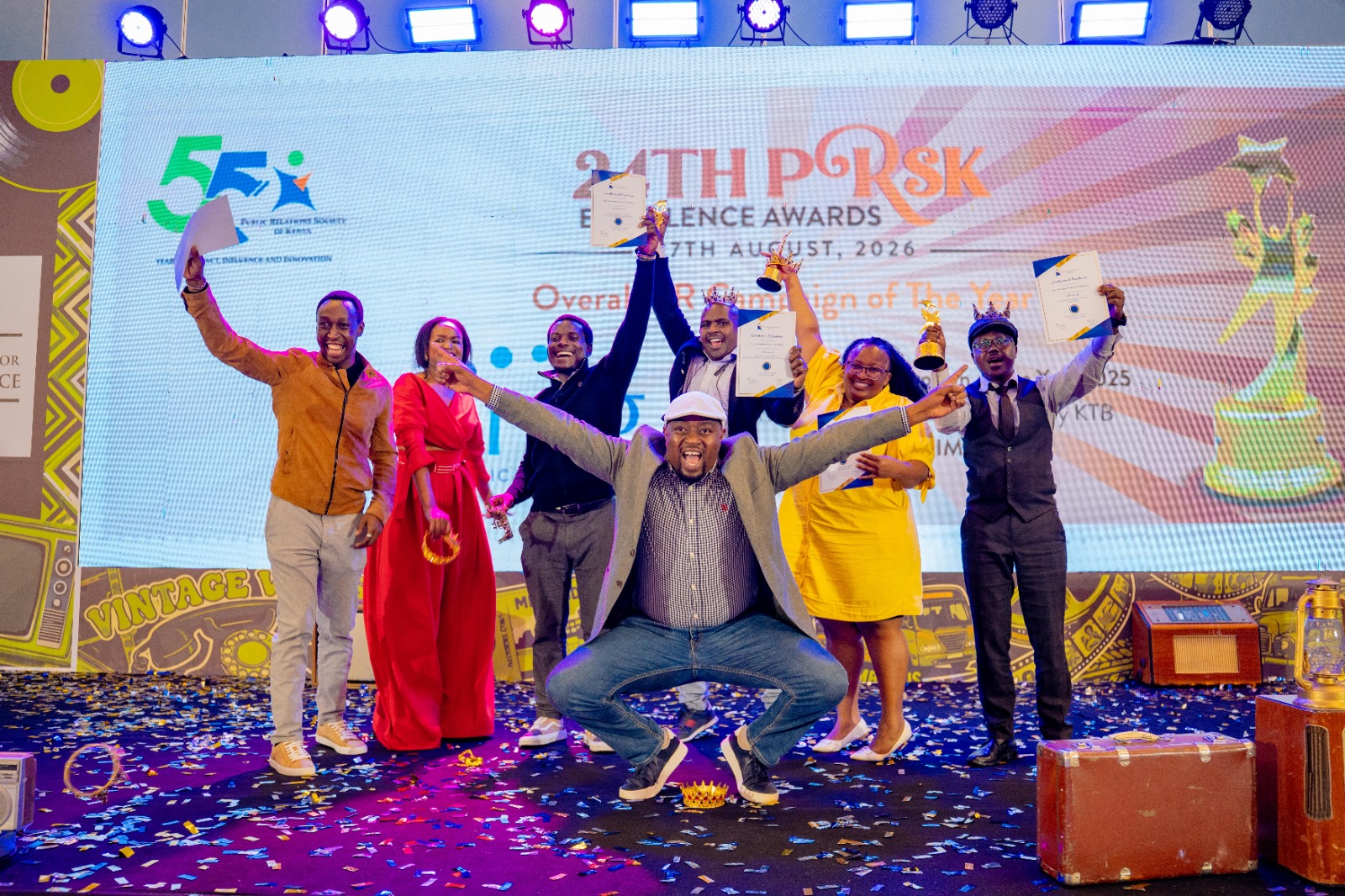
The latest PRSK Excellence Awards placed trust, evidence and measurable impact at the centre of what strong public relations increasingly looks like in Kenya.
By Judith Akoth
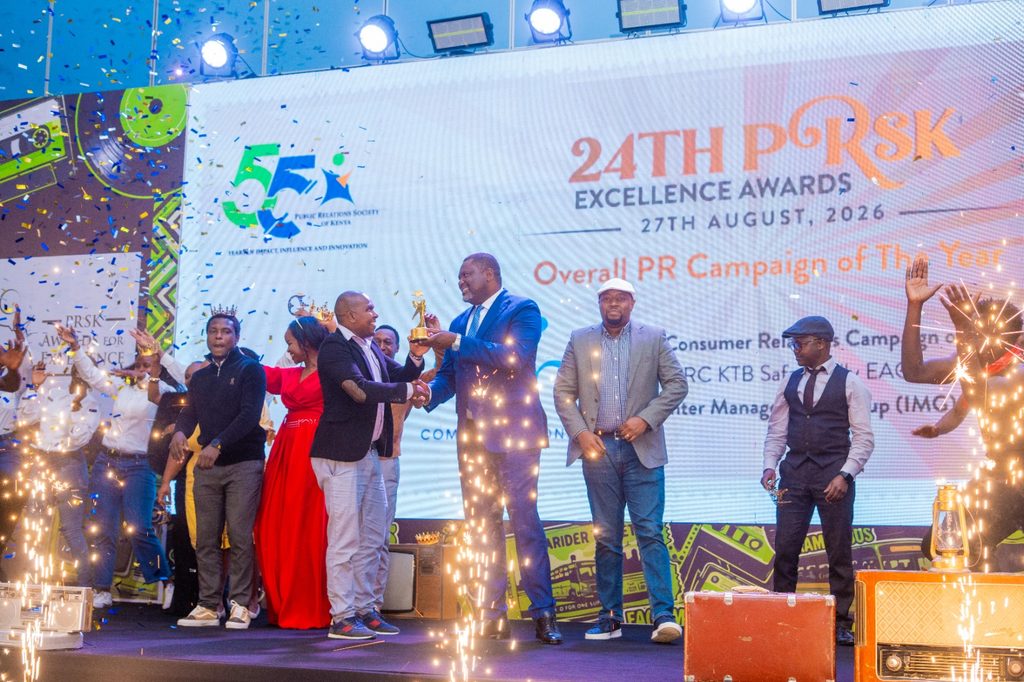
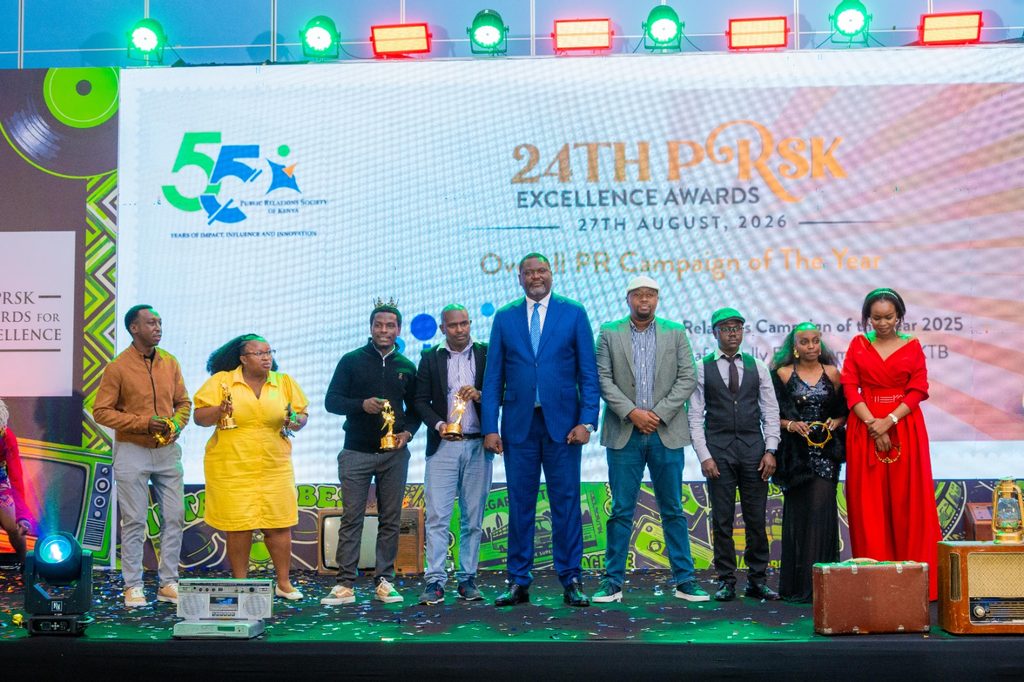
IMG Kenya took the highest campaign honour at the latest Public Relations Society of Kenya (PRSK) Excellence Awards after its work with the Kenya Tourism Board on the WRC/Kenya Tourism Board Safari Rally East Africa Campaign was named Overall PR Campaign of the Year.
The campaign also won Consumer Relations Campaign of the Year, making it one of the standout entries at the 24th PRSK Excellence Awards and 55th Anniversary Gala held on August 27, 2026, at The Edge Convention Centre in Nairobi.
IMG Kenya said the campaign brought together strategic storytelling, creativity and collaboration to showcase Kenya to audiences beyond its borders. The agency said the victory marked its second consecutive Overall PR Campaign of the Year award.
IMG Kenya also won Public Sector Campaign of the Year for its work with the Kenya Wildlife Service on the Review of the Wildlife Conservation and Management Regulations campaign.
Evidence and impact take centre stage
Beyond the trophies, one message stood out during the night: communication increasingly has to prove its value.
PRSK Awards Panel Chair Wausi Walya said entries were assessed against professional standards, including evidence, ethical strategy and measurable outcomes. Some awards were withheld where entries did not meet the required threshold.
The message for practitioners was clear. Strong campaigns need to show the problem they addressed, the strategy used, how audiences responded, and what changed as a result.
That raises the bar for communication teams at a time when organisations increasingly expect public relations to demonstrate its contribution to reputation, trust, behaviour and organisational goals.
PRSK President Arik Karani reinforced that message, using the Society’s anniversary held on Thursday, August 27, 2026, to reflect on how far the profession has come.
“Fifty-five years ago, PRSK started with just four members. Today, we have a vibrant institution shaping how the nation communicates,” Karani said.
He challenged practitioners to continue raising professional standards and position Kenya as a continental leader in communication excellence.
The anniversary also turned attention to where the profession is heading. Practitioners face higher expectations around trust, ethics, misinformation, and demonstrating the value of their work.
Campaigns recognised across sectors
The PRSK Excellence Awards recognised work across public affairs, crisis and reputation management, public sector communication, internal communication, partnerships and other areas of strategic communication.
Among the winners was Nyandarua County Government, recognised for its Lake Ol’Bollosat Half-Marathon publicity campaign.
P&L Consulting Group also received recognition in crisis and reputation management for its work involving The Nairobi Hospital.
The range of categories reflects how broad the role of public relations has become. Today, communication practitioners may work on reputation, policy, stakeholder engagement, internal communication, or national campaigns within the same profession.
Six practitioners receive 2026 PRSK Moran Awards
PRSK also recognised six practitioners with the 2026 Moran Awards for their leadership, contribution and commitment to public relations and communication.
The Moran Award recipients were Calvin Nyagudi of Kenya Electricity Transmission Company Limited, James Karanja of Nairobi City Water and Sewerage Company, Charles Wokabi of Absa Bank Kenya, Titus Kisangau of Amref Health Africa, Beverlyn Naliaka of Tim-Sky Media Services, and Lawrence Njenga of the Kenya Association of Manufacturers.
They join other recent Moran Award recipients, including Hezron Ochiel of Kenya Medical Training College, Pamela Muthui of East African Portland Cement PLC, Joy Kivata of World Vision East Africa, Diana Obath of Janus Continental Group, and Vivienne Atieno of KCB Bank Group.
The Moran Awards have become one of PRSK’s prominent forms of individual professional recognition, highlighting practitioners whose work and contributions help strengthen Kenya’s communication profession.
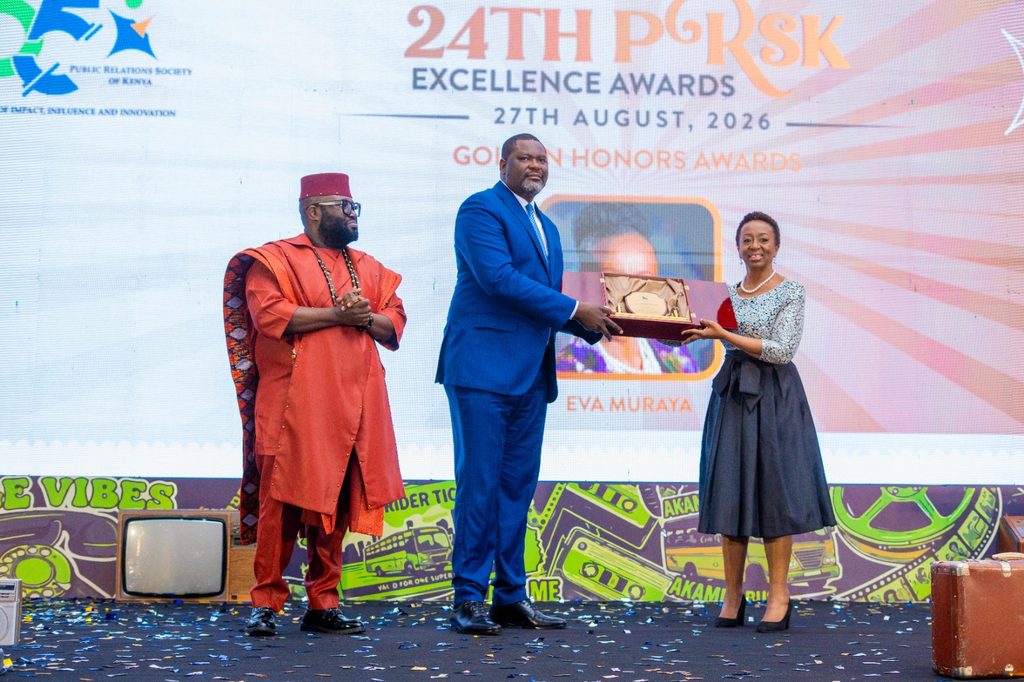
PRSK also recognised senior practitioners with lifetime achievement honours as the Society marked 55 years since its establishment in 1971.
The anniversary carries additional significance for the awards. Former PRSK Chairperson Dr. Fatuma Hirsi Mohamed, who led the Society between 2002 and 2007, said the Excellence Awards were introduced during her tenure 24 years ago.
Communicators challenged to protect public trust
The ceremony also turned attention to misinformation and the responsibility communicators carry in shaping public understanding.
Public Service, Human Capital Development and Special Programmes Cabinet Secretary Geoffrey Ruku challenged communication professionals to safeguard public trust and ensure citizens receive accurate information.
“Communication is not a peripheral function of government; it is the core machinery of governance,” Ruku said.
He said policies, projects and reforms have limited impact when citizens do not understand them or trust the information surrounding them.
Ruku also urged government communicators to verify information and actively respond to misinformation, particularly as Kenya moves closer to the 2027 General Election. Kenya News Agency’s coverage of the PRSK gala provides more details about his remarks.
He further expressed government support for the Public Relations and Communication Management Bill, which seeks to strengthen the professional and regulatory framework governing public relations practice in Kenya.
What the PRSK Awards say about the future of public relations
The latest PRSK Excellence Awards showed a profession paying closer attention to the evidence behind its work.
Creativity, storytelling and visibility still matter. Campaigns are also being judged by what they achieve. Did people understand the message? Did they respond? Did trust improve? Did the work lead to action?
For practitioners, this makes measurement part of the campaign from the beginning. As explored in What PR Teams Should Measure in 2026, useful PR measurement should capture outcomes such as trust, understanding, stakeholder action and reputation.
That starts with defining success before a campaign begins, collecting evidence as the work progresses and linking results to the problem the campaign was meant to address.
Clearer measurement also helps organisational leaders see the value of PR work and consider it more seriously in decision-making.
Trust now matters across more channels because people discover information through social media, search engines and generative AI. The sources and organisations they encounter can shape which institutions they recognise, consult and trust. This is explored further in How AI Search Is Changing Trust, Visibility, and Public Relations in Africa.
For PR teams, the challenge is becoming clearer: produce credible information, measure what changes, and make sure that expertise is easy to find.
That is also one of the strongest messages from this year’s PRSK Excellence Awards. Campaigns that can show what they achieved will have a stronger claim to professional excellence.