
How a question about AI and African knowledge became published research, and what it taught me about finding opportunity in everyday work.
By Hezron Ochiel
On 14 October 2026, I received an email from Tennessee State University in the United States. My paper on AI and Black Atlantic knowledge had been accepted for presentation at the university’s 13th Annual Africa Conference in April 2027.
I was pleased. The news brought back a question that had occupied my mind a few months earlier:
When someone asks ChatGPT, Gemini, DeepSeek or Perplexity about a humanitarian crisis in Africa, whose knowledge does the AI platform cite?
I had worked in journalism and strategic communication, where the source of information matters. As more people turned to AI for answers, I wondered how often African researchers, journalists and institutions appeared among the sources those platforms cited.
I decided to find out. I am sharing what followed because you may have a question in your own profession that deserves the same attention.
From a question to evidence
In August 2026, I developed the African Humanitarian AI Citation Index (AHACI).
I tested 90 standardised questions across four AI platforms and ten African countries. The study covered 360 platform-question observations and identified 1,083 verifiable citations.
The results surprised me. Only 5.5 per cent of citations came from organisations based in the African country being discussed. UN agencies and other multilateral organisations accounted for 68.8 per cent.
The study examined visible, recoverable citations in a defined set of English-language questions. It could not establish everything happening within the platforms or why they selected particular sources. Still, it raised a question worth pursuing: whose knowledge becomes visible when AI explains African realities?
I documented the methodology and findings, then published the research on Hezron Insights.
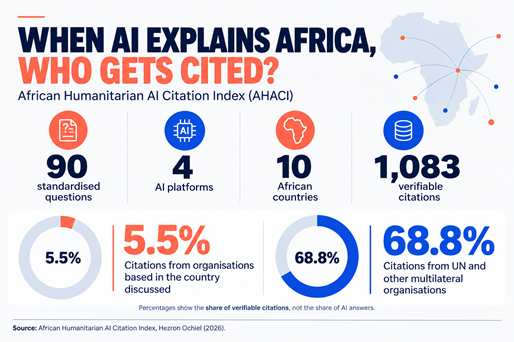
Figure 1. African Humanitarian AI Citation Index (AHACI), 2026.
When the research reached other audiences
On 28 August 2026, African Arguments published my article, When AI Explains African Crises, Local Knowledge Is Barely Visible.
On 25 September, Global Policy published Citation Localisation: The Next Humanitarian Frontier.
During the editorial process, I was asked for a link to the underlying research. I could provide the paper with the methodology and findings. That request stayed with me. The editor and readers needed a way to examine the evidence behind the article.
I had shared the findings with editors covering humanitarian affairs and African knowledge. Publication required work beyond the original study: explaining why the results mattered to each audience and making the supporting evidence accessible.
Other research opportunities followed
Not every opportunity came from AHACI. Around the same time, several projects drawing on my wider experience in communication and research were receiving positive responses.
On 7 September, the University of Southern Queensland in Australia accepted From Communication Channels to Audience Information Journeys: Rethinking Strategic Communication Planning for its 33rd Postgraduate and Early Career Researcher Symposium, scheduled for 23 October 2026.
On 27 September, my AHACI-related paper, When AI Explains Africa: Whose Knowledge Shapes Human Understanding?, was accepted for the Africa International Conference on Human Enhancement, taking place on 10–11 December 2026 at the University of Abuja, Nigeria, with virtual participation available.
Tennessee State University subsequently accepted From Archive to Algorithm: AI Retrieval and the Visibility of Black Atlantic Knowledge for its 13th Annual Africa Conference, scheduled for 14–16 April 2027. My participation remains subject to completing conference registration.
There was also encouraging fellowship news. On 26 September, the Sankofa Research and Mentorship Hub confirmed my selection as an African Research Fellow from a pool of more than 1,400 applicants across Africa.
I value these developments, while recognising the different work and applications behind them. What AHACI showed me most clearly was how a professional observation could become a study others could read, question, and build on.
How do you find a question worth pursuing?
Looking back, AHACI emerged where three things met: my experience in journalism and humanitarian communication, a shift in how people use AI to find information, and an unanswered problem about the visibility of African evidence.
You might recognise a similar intersection in your own work. A lecturer could investigate why students struggle with a topic despite having access to digital learning tools. A nurse could examine why patients repeatedly misunderstand certain instructions. A communication officer could study why customers cannot find information already published on an organisation’s website.
Before investing time in an idea, ask yourself:
1. Does the problem affect people or institutions in a meaningful way?
2. Is there something important we still do not understand?
3. Can I gather reliable evidence to investigate it?
If you can answer those questions, you may have the beginnings of a useful project.
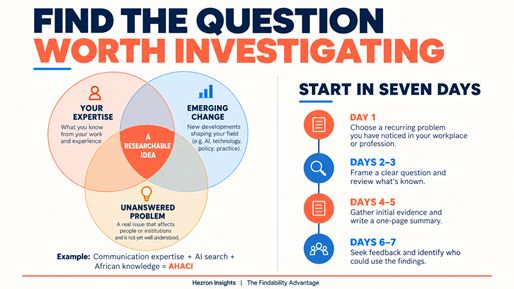
Figure 2. A practical framework for recognising and investigating workplace questions.
A seven-day starting point
You do not need to finish a research project in a week. You can, however, make a serious start.
Day 1: Write down three recurring problems you have noticed. Choose one that matters to the people you work with or serve.
Days 2–3: Turn it into a specific question. Check what others have already written or discovered about it.
Days 4–5: Gather some initial evidence and prepare a one-page summary. Be clear about what the information can and cannot tell you.
Days 6–7: Ask who could use your findings. Seek feedback and consider whether the idea could become an article, an improvement at work or a larger study.
You can use AI tools to explore possible questions or organise information, but verify important claims and protect confidential data. Research involving people or private records may require permission before you begin.
By the end of the week, you should have a clearer question and a sensible next step.
Give useful work a chance to be found
The editor’s request for my underlying research reinforced a lesson I have been writing about for some time: people need a way to find and assess the work behind our claims.
If you have improved a process, developed an innovation or investigated a recurring problem, keep a record of what you did and what you learned. Where appropriate, publish it in a form others can understand and reference.
This is one of the ideas behind my forthcoming book, The Findability Advantage: How to Make Expertise Visible, Verifiable and Trusted in the Age of AI, launching on 28 November 2026. The book explores how professionals and organisations can make their expertise easier to find, understand, trust, cite and recommend through search engines, AI platforms and other digital channels.
Almost every profession has questions worth investigating. Some have been discussed in meetings for years. Others appear in complaints, repeated mistakes or the gaps between what an organisation publishes and what people understand.
Before this week ends, choose one of those questions and find out what it would take to investigate it.
I still do not know where that original question about Africa will eventually lead.
But I know where I would be if I had never asked it.
Hezron Ochiel is a strategic communication professional, researcher, author and founder of Hezron Insights. He serves as Assistant Director, Corporate Communication at the Kenya Medical Training College and is an African Research Fellow with the Sankofa Research and Mentorship Hub.