
They say all publicity is good publicity, whether positive or negative. But any public relations professional worth their salt knows that not all attention is worth celebrating. Some negative publicity has the power to destroy your brand, break your spirit, and even threaten the very survival of your organization.
We are living in a time where the media, both traditional and digital, can make or break you. One moment you are trending for a successful product launch or a community impact story. The next, you are in the spotlight for all the wrong reasons. That is double-edged sword of the digital age. It has the ability to amplify both your best and worst moments in equal measure.
In this edition, I take you behind the scenes of digital crises, exploring how they start, why bloggers often lead the storm, and most importantly, how to protect your brand when things go south. From forming your crisis team to rebuilding public trust, this guide offers practical steps to help you respond with clarity, strategy, and integrity.
Nothing rattles PR professionals more than waking up to a storm they didn’t see coming. That uncomfortable moment when you realize your organization is trending for the wrong reasons. Suddenly, it doesn’t matter how many years you’ve spent building trust, nurturing stakeholder relationships, or fine tuning your brand voice. One viral tweet, one leaked video, or one poorly handled situation is all it takes to shift the narrative, and fast.
We have seen it happen time and again. Brands once held in high regard are now cautionary tales. Institutions that took decades to build have been undone by a single weekend of digital backlash. Even the most structured organizations can find themselves vulnerable when caught off guard by the tidal wave of negative online exposure.
Do you remember Dr. David Dao?

In 2017, United Airlines became the global example of what a corporate crisis looks like in the digital age. A video surfaced showing Dr. David Dao being violently dragged off an overbooked flight, and it spread like wildfire. Indeed, the footage was disturbing, but what shocked many of us even more was how fast the world reacted. Within hours, social media had painted United Airlines as the ultimate villain. By the next day, the airline had lost nearly one billion dollars in market value.
United Airlines eventually bounced back, but it didn’t happen overnight. It took years of rebuilding trust, saying sorry to the public, and fixing things internally. But let’s be honest, not every business has the luxury of time, money, or a big PR team. What happens when it is a small company without deep pockets or backup plans?
In cities across the world, especially in the United States, small businesses have collapsed due to false or misinterpreted accusations online. In some cases, it was mistaken identity. In others, outright fabrication. Once the story takes off, few get a chance to control the outcome.
In Kenya, the situation is no different.
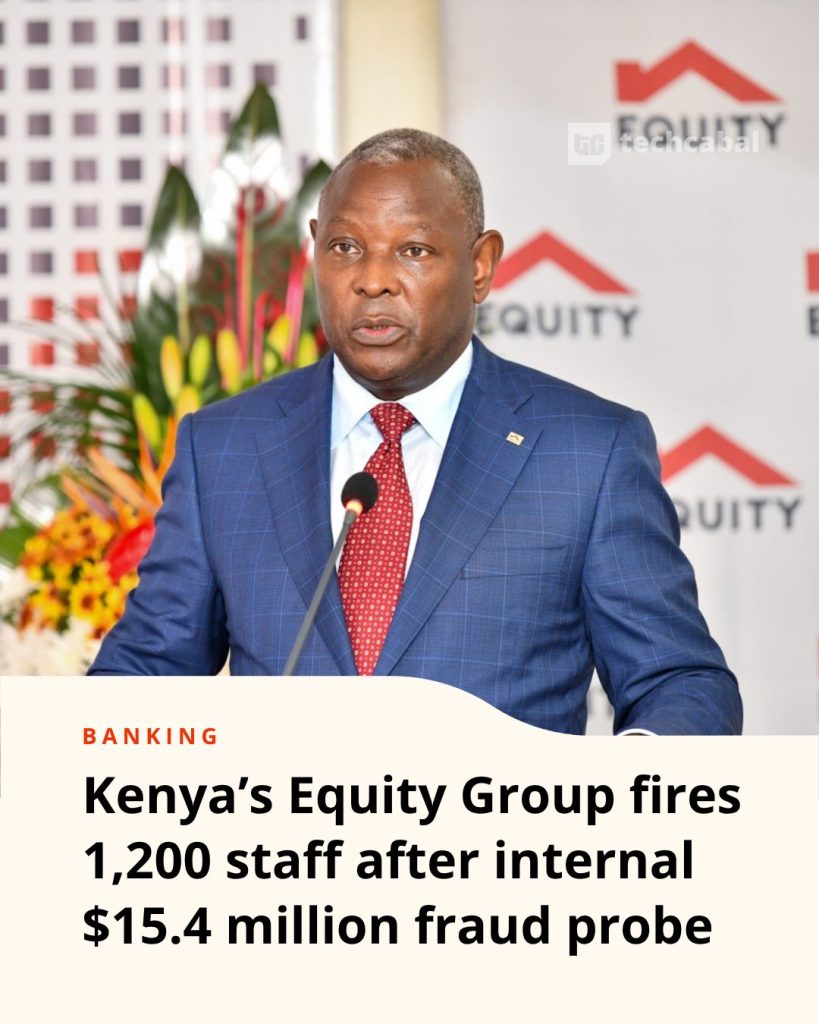
In recent months, Kenya’s largest financial institution, Equity Bank, made headlines after dismissing around 1,200 employees over an alleged internal fraud. The scandal, which involved insiders manipulating payroll systems across 47 transactions, led to the loss of approximately Ksh 1.5 billion (USD 11.5 million).
Once known for its digital leadership and strong brand, Equity is now facing heightened scrutiny over its cybersecurity systems, internal controls, and overall customer trust. While the bank has taken commendable steps such as firing implicated staff and committing to transparency, rebuilding public confidence will require time, consistent accountability, and a clear demonstration of internal reforms.
How the Internet changed everything
Considering the events unfolding in today’s digital landscape, it is clear that the internet has fundamentally transformed access to information, making it not only widespread but instant and unfiltered. In this environment, virtually anyone armed with a smartphone and a social media account has the power to become a self-styled publisher, shaping narratives and influencing public opinion in real time.
While this evolution offers brands an unprecedented opportunity to communicate directly with their audiences and tell their stories in a more authentic and relatable way, it also exposes them to the unpredictable risks of misinformation, viral distortion, and what I often describe as digital warfare, a ruthless battleground where perception moves faster than facts.
In this space, it no longer takes a formal investigation or mainstream media coverage to spark a reputational crisis; a single misleading tweet, an out-of-context video clip, or a screenshot, real or manipulated, is enough to send a brand into freefall before the truth has even had a moment to gather its footing.
Which brings us to the hard questions: How did we arrive at this point where brand credibility can be dismantled by anonymous bloggers or trending hashtags? Why do these digital figures, many without formal training or accountability, instill such fear in even the most established organizations? And perhaps most urgently, what should companies do when the narrative turns against them and the storm begins to rage?
Let us unpack this unfolding reality.
How blogging rose to prominence in Kenya
Blogging in Kenya started out as a creative outlet. In the early 2000s, it was a hobby for writers, tech enthusiasts, and socially conscious youth. People used blogs to share poetry, opinions, and observations.
Then came the 2007 post-election violence.
At a time when mainstream media was restricted, bloggers like Daudi Were and Ory Okolloh filled the gap. Their platforms became vital sources of real-time updates. They documented what others wouldn’t. That moment turned blogging into a serious tool for activism.
By the early 2010s, blogs like Mzalendo were holding elected leaders accountable. Other platforms were exposing corruption and public service inefficiencies. At the same time, entertainment and lifestyle blogs were growing rapidly. Sites like Ghafla and Niaje became common names in Kenyan households.
Then social media entered the picture.
Twitter, Facebook, and Instagram changed everything, allowing bloggers to trend using Twitter threads, Facebook Live, or Instagram Reels without the need for a traditional website.
But something else changed too.
As bloggers gained influence, some found a different path, one where content was less about truth and more about calculated strategy. Between 2013 and 2017, blogging became highly politicized with some turning into digital mercenaries. They were paid to push propaganda, trend hashtags, or destroy reputations. What began as a freedom movement turned into a high-stakes digital battlefield.
Then came TikTok, the video sharing platform that has dramatically reshaped the global blogging landscape. What initially emerged as a space for lighthearted dance clips and viral challenges quickly evolved into a powerful vehicle for civic engagement, storytelling, and digital activism.
In Kenya, members of Generation Z have fully embraced the platform, using it not just for entertainment but as a tool to demand accountability and drive social change. A striking example is the recent wave of anti-tax protests, where TikTok played a central role in mobilizing crowds, amplifying public dissent, and documenting the unfolding events in real time for both local and international audiences.
The world of content has become faster, more immediate, and more visual. This shift has democratized storytelling but also blurred the lines between journalism, activism, advocacy, and influence.
Today, the word “blogger” in Kenya carries mixed emotions. To some, it conjures images of biased hired guns pushing propaganda. To others, it represents fearless voices challenging the status quo and giving a platform to issues mainstream media might ignore. The digital battlefield is more crowded than ever, and the role of bloggers continues to evolve, both celebrated and feared depending on whose side of the story you’re on.
In the tech, fashion, and travel space, bloggers are respected creators. But in politics and public institutions, they are viewed with suspicion. To avoid the negative baggage, many ethical bloggers now refer to themselves as content creators, digital storytellers, or online journalists.
Whether they are called bloggers or by any other name, one thing is clear: their power is undeniable and strong enough to shake even the most established brands.
Lessons from my experience with bloggers in Kenya
Having spent years in the newsroom and corporate communication space, I have crossed paths with many bloggers.
I met them at media conferences and again at political events, often mingling with the movers and shakers of the country’s political landscape. Unless you have a keen eye, it is difficult to distinguish between a journalist and a blogger. The key difference, however, is that unlike journalists, bloggers operate without accreditation from any regulatory body.
But here’s something most people don’t know.
Some bloggers are extremely smart.
They read widely, research thoroughly, and listen closely, attuned to the rhythm of public sentiment and often sensing a breaking story even before newsroom editors do.
These are no longer idle rumor peddlers; many are strategic, calculating, and deliberately influential, which is why dismissing them outright can be a costly mistake.
Let me show you how they work.
How bloggers launch attacks
1. Build insider networks
They quietly cultivate relationships within organizations, whether with a junior employee, a cleaner, or even someone in a senior position, and these insiders often become sources of screenshots, confidential documents, or internal gossip, sometimes driven by nothing more than bitterness and a desire to damage their employer.
2. Scan media and public records
They monitor newspapers, press releases, government tenders, circulars, and gazette notices, scanning for inconsistencies or anything that appears suspicious, and once they find something, they add their own spin to it, often making the story sound explosive.
3. Monitor social media platforms
They follow your corporate pages, read customer complaints, study the tone of engagement, and often use a single overlooked comment as their entry point to spark a crisis.
4. Join closed groups
They are active in professional WhatsApp and Telegram groups, which often serve as goldmines for gossip and real-time unfiltered discussions, where casual remarks are repackaged and presented as insider leaks.
5. Operate anonymous accounts
They often create fake profiles to circulate controversial content, using these ghost accounts to spread their message while shielding their real identity, which in turn amplifies the perception of a widespread public outcry.
6. Pick strategic timing
They time their content drops when your team is offline, such as weekends, public holidays, or after hours, ensuring that by the time you notice, the damage is already done.
7. Use provocative language
They understand what triggers people, crafting headlines designed to provoke anger, empathy, or outrage, with the ultimate goal being not truth, but traction.
8. Negotiate behind the scenes
Once a story is out, they reach out to the affected company for a negotiation, sometimes offering to take down the content at a fee, while others suggest partnership opportunities, turning what should be accountability into a digital form of extortion.
So, what makes your organization an easy target?
Why some brands get attacked easily
1. Poor internal communication
When employees feel left out, ignored, or frustrated, they leak information. A memo, notice, or circular that does not land well internally often finds its way to external platforms.
2. Ignored customer complaints
Some brands treat social media like a suggestion box. Complaints go unanswered, and responses feel cold or robotic. This frustrates people. One tweet is all it takes to open the floodgates.
3. Weak online presence
If you are not actively telling your story, someone else will tell it for you, and they may not be kind. A brand that does not control its narrative is vulnerable.
4. Past media scandals
Old news can be recycled into new controversies. Bloggers often revive past stories, especially when the individuals involved are still part of the system.
5. Business rivalry
Competitors use bloggers to fight proxy wars. This is common in sectors driven by tenders. You may be attacked not because of something you did, but because of who you are associated with.
6. Leadership scandals
If your top executive is involved in a personal scandal, it becomes public property. Lifestyle choices, financial dealings, or family disputes can spill into your brand reputation.
7. Lack of a crisis plan
When trouble hits and you have no plan, confusion quickly takes over, creating the perfect environment for bloggers to step in and control the narrative to their advantage.
8. Internal sabotage
Sometimes the enemy is within. A disgruntled employee who feels unfairly treated may choose to bypass formal channels and instead leak internal emails or policy drafts to online platforms in a bid to stir public backlash.
9. Non-compliance with demands
In some cases, bloggers directly demand money or special favors in exchange for silence or favorable coverage. When these demands are not met, they retaliate by launching targeted attacks, twisting facts, resurfacing old controversies, or amplifying negative stories.
10. Small mistakes that go viral
A simple typo in an official statement, an ill-timed or poorly worded social media post, or a photo misinterpreted and taken out of context may seem like minor slip ups in the corporate world, but can quickly spiral into full blown digital scandals.
Why communication audits matter
One of the most effective tools I always recommend for public relations specialists in today’s unpredictable digital landscape is a regular communication audit. It helps assess how information flows internally and externally, ensures messages align with organizational values, and identifies weak points in the communication chain before they become crisis triggers.
What to do when crisis hits
We all fear crisis, and when it strikes, many brands rush to craft a response, sometimes reacting even to a single post. The truth is, not every post warrants a reply; to determine whether to act or ignore, public relations specialists must evaluate the post’s impact, particularly its reach. If it draws minimal engagement, it can be safely ignored, but if it gains significant traction and meets the threshold of a crisis, the following steps can help mitigate the situation.
1. Form a crisis team
Bring together key departments such as legal, HR, IT, and communications into a coordinated crisis unit. Set up a centralized channel for real time collaboration; in many cases, a WhatsApp group proves highly effective for swift decision making and updates.
2. Draft a holding statement
Do not rush to deny or go on the offensive; instead, acknowledge that you’re aware of the situation, commit to looking into it, and avoid making speculative statements that could backfire.
Example:
“We are aware of a matter circulating online and are actively looking into it. We will issue a full update once all facts are verified.”
3. Communicate internally
Make sure your staff hears the truth from you first, not from bloggers or social media. Share clear facts so they know what is going on.
4. Control the narrative
Share your official statement across all platforms and pin it for visibility. Actively monitor hashtags, mentions, and trending conversations, and respond with calm, consistent, and fact-based messaging to maintain credibility and steer public perception.
5. Show empathy
If your brand is at fault, acknowledge the mistake with sincerity and take responsibility. If the accusations are false, respond with clarity and respect, focusing on facts rather than defensiveness. Empathy builds trust, even in difficult moments.
6. Give follow-up updates
Keep your audience informed by sharing the results of your investigations and outlining the actions you’ve taken. This demonstrates accountability, reinforces your commitment to transparency, and shows that you’re actively addressing the issue rather than just managing appearances.
7. Rebuild trust
As part of your recovery strategy, consistently share authentic stories that reinforce your brand values and demonstrate real progress. Roll out reputation-building campaigns that showcase corrective actions, highlight team contributions, and emphasize lessons learned. This not only restores public confidence but also positions your brand as accountable and evolving.
Final thoughts
In today’s digital landscape, reputation stands as a vital asset that demands consistent and deliberate protection. Bloggers and online voices may grow loud, strategic, or even unethical, but organizations retain the power to shape their narrative through thoughtful preparation, measured response, and steady recovery.
Public relations remain a central pillar of crisis management. It helps address public concerns, clarify facts, and resolve underlying issues or complaints that may have triggered the crisis. Recovery calls for intention, clarity, and leadership. Let your brand be remembered for the way it responded and the progress it achieved afterward.