
By Hezron Ochiel
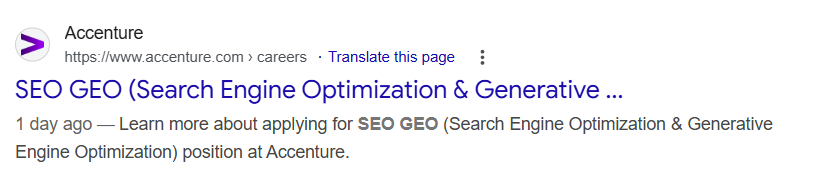
A new analysis by Hezron Insights reveals a sharp rise in demand for Search Engine Optimisation (SEO) and Generative Engine Optimisation (GEO) talent as companies respond to the growing influence of AI-powered search systems and zero-click discovery.
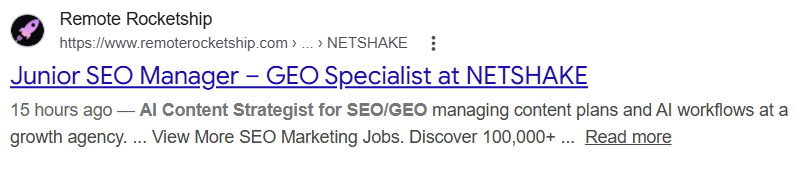
The six-month analysis reviewed job placement sites in Kenya and globally and found that organisations are increasingly hiring professionals with expertise in organic search visibility, AI discoverability, structured content systems, and AI-driven search strategy.
The findings emerge at a time when digital marketing is undergoing one of its biggest transformations in decades. AI Overviews, conversational search tools, and large language models such as OpenAI ChatGPT, Google Gemini, Anthropic Claude, Microsoft Copilot, and Perplexity AI are rapidly changing how people discover information online.
According to the Hezron Insights analysis, more than 200 SEO and GEO-related job opportunities were advertised in Kenya over the last six months alone, reflecting growing demand for professionals who can help brands improve visibility across search engines and AI-powered discovery platforms.
The trend is accelerating globally.
In the United States, a recent study by Semrush analysed 3,900 SEO-related job listings and found that companies are rapidly expanding hiring around AI search visibility, AI-driven discovery, experimentation, and cross-platform digital visibility. The study revealed that 31% of senior SEO job listings now explicitly mention AI skills, while familiarity with Large Language Models (LLMs) appears in nearly 10% of senior-level openings. The findings show that AI search expertise is quickly becoming a core requirement in the evolving digital economy.
The Hezron Insights review identified a growing number of organisations recruiting specialists to improve visibility not only on traditional search engines but also inside AI-generated answers and conversational search systems.
Among the companies hiring in Kenya were:
- Brafton Inc. — hiring SEO Strategists remotely in Africa.
- Nevin Digital Marketing Agency — hiring an SEO Expert.
- BruntWork — advertised for a Website and SEO Specialist.
- CCI Global — hiring a Senior SEO and AI Discoverability Specialist.
- Pharmaplus Pharmacies — hiring an SEO and Organic Growth Specialist.
- DOAN College — advertised for an SEO and Digital Marketing Specialist.
The analysis further found that demand for GEO and AI visibility specialists is expanding rapidly, with some companies offering six-figure salaries for highly specialised expertise.
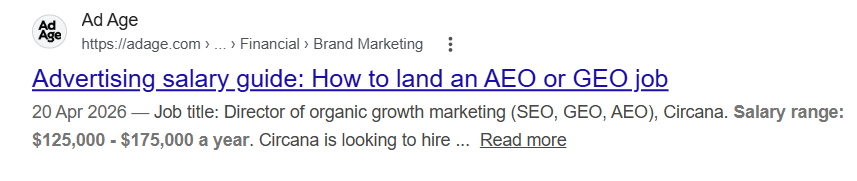
Evertune AI advertised for an AI Strategist to serve as a client-facing SEO and GEO expert, offering an annual salary ranging between $120,000 and $150,000 (approximately Ksh15.5 million to Ksh19.4 million annually) plus stock options.
FedEx hired a Digital Marketing Advisor, GEO/SEO, with a monthly salary range of $7,882 to $13,006, which translates to roughly Ksh1 million to Ksh1.7 million per month.
Texas Instruments advertised for an AI Visibility and Search Strategy Specialist.
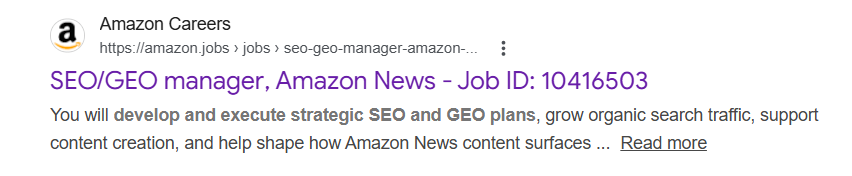
Amazon advertised for an experienced SEO and GEO Manager for the AboutAmazon.com platform, with an annual salary ranging between $130,000 and $185,000 (approximately KSh16.8 million to Ksh23.9 million annually).
Most of the advertised roles required expertise in technical SEO, content marketing, AI visibility systems, structured content architecture, digital analytics, machine-readable publishing systems, and large-scale search strategy. Many employers also demanded experience managing SEO programs “at scale” or working directly with AI search and generative discovery systems.
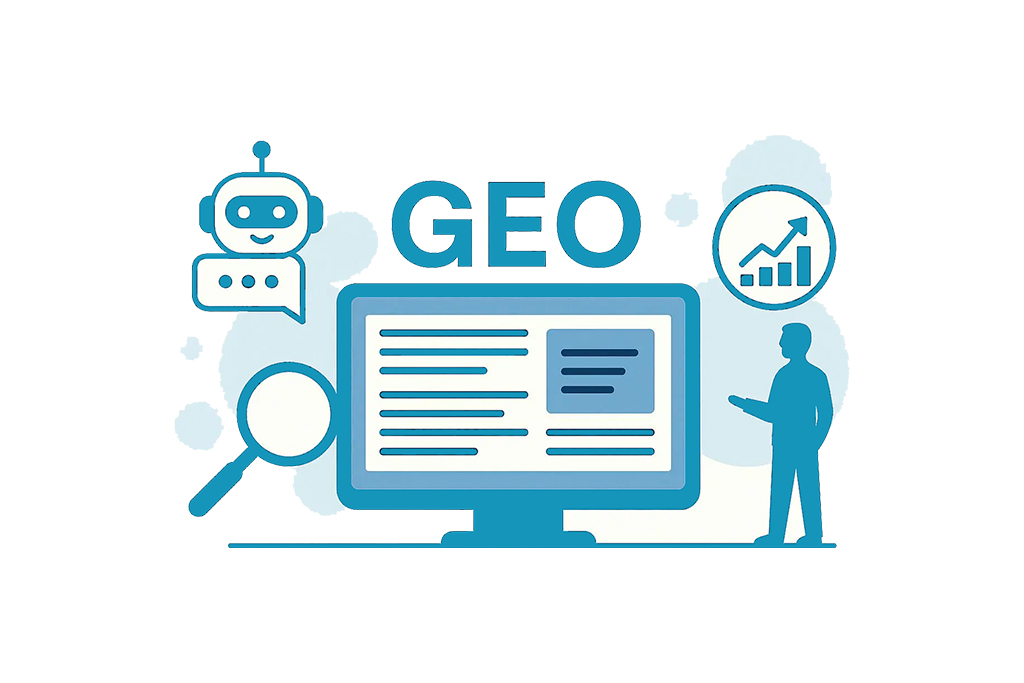
Why Companies Are Investing Heavily in GEO
The growing interest in GEO reflects a major shift in how people search for information online.
Users increasingly want direct answers instead of clicking through multiple websites.
Google AI Overviews, ChatGPT, Gemini, and other AI systems are reshaping online behaviour by delivering summarised responses instantly.
The trend is creating what industry experts describe as the “zero-click internet,” where users receive answers without necessarily visiting webpages.
Industry reports estimate that more than 60% of Google searches now end without users clicking through to external websites. The shift is forcing brands, publishers, and marketers to rethink digital visibility entirely.
Companies previously focused on ranking highly on search engines.
Today, they are increasingly competing to become visible inside AI-generated answers themselves.
SEO Is Expanding Into AI Visibility
The Hezron Insights analysis shows that organisations are no longer treating SEO purely as a traffic-generation strategy.
Companies are increasingly viewing SEO and GEO as part of a broader visibility infrastructure designed to help brands become discoverable, trusted, and recommendable by AI systems.
Generative Engine Optimisation focuses on structuring content in ways AI systems can retrieve, understand, summarise, and cite.
The strategy involves building machine-readable authority across websites, digital publications, structured data systems, interviews, media mentions, and social platforms.
Industry experts say this transformation is reshaping the role of communication professionals.
“Search is evolving from a traffic acquisition channel into a visibility and authority ecosystem,” said Rand Fishkin, co-founder of SparkToro.
“Brands that structure their expertise clearly and consistently across the web are more likely to be surfaced by AI systems.”
SEO expert Lily Ray has also argued that modern search visibility is increasingly tied to trust, credibility, authority, and consistency across platforms.
The shift is pushing communication professionals, journalists, PR practitioners, marketers, and digital storytellers to acquire technical search and AI visibility skills.
Agencies Are Competing for SEO and GEO Talent
The hiring surge is becoming so intense that agencies are now competing aggressively for experienced SEO professionals.
A recent report by Digiday revealed that agencies are rapidly expanding teams focused on AI discoverability, zero-click strategy, and GEO expertise as client demand accelerates.
The report noted that organisations increasingly want specialists capable of helping brands remain visible even when users no longer visit websites directly.
The internet was traditionally built around clicks and website traffic.
The AI era is shifting attention toward discoverability inside generated answers.
Users now ask questions conversationally.
AI systems respond instantly.
Brands compete to become part of those responses.

The Skills Becoming Most Valuable
According to the Hezron Insights analysis, the most in-demand skills now include:
- Technical SEO
- GEO strategy
- Structured data and schema markup
- AI discoverability
- Digital PR
- Search analytics
- Content architecture
- Entity optimization
- Knowledge graph development
- AI visibility monitoring
- Machine-readable publishing
- Authority building
The findings suggest that professionals who understand how AI systems retrieve, evaluate, summarise, and recommend information may become increasingly valuable over the coming years.
Organisations are also beginning to prioritise “search visibility ecosystems” rather than isolated SEO campaigns.
Companies increasingly want professionals capable of integrating search strategy, digital authority, reputation management, content systems, and AI discoverability into one connected framework.
What the Hiring Market Is Already Showing
Recent job listings and industry signals show that demand for SEO and GEO talent is now evident across multiple sectors.
In the past six months, roles referencing AI visibility, search strategy, content discoverability, and generative search optimisation have increased across both global and regional job platforms.
A review of listings across Kenya and international markets shows a clear shift in how these roles are defined. Hiring is expanding beyond traditional SEO toward professionals who understand how content is discovered, interpreted, and surfaced across search engines and AI systems.
Some roles now explicitly reference:
• AI search behaviour.
• structured content visibility.
• discoverability across platforms.
This points to an evolving visibility function that extends beyond rankings into how information is understood and surfaced.
What Recruiters Are Saying
Recruiters are observing a growing gap between demand and capability.
Lameck Tala of Switch On Careers noted: “We are seeing strong demand for visibility-related roles, yet very few candidates can demonstrate how content performs beyond traditional search. Many still think in terms of keywords. Companies are now focusing on discoverability across systems.”
He added, “The challenge is not talent availability. It is talent readiness. The market is moving faster than the skills.”
These observations highlight a disconnect between what organisations require and the skills currently available in the market.
Salary Signals: Where the Market Is Heading
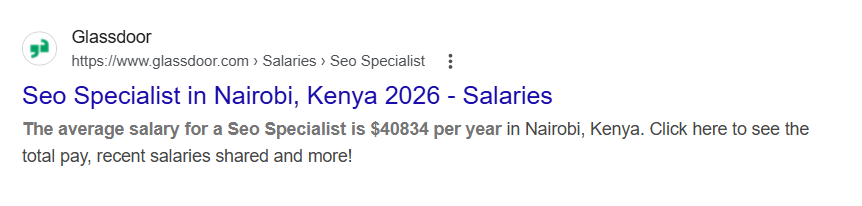
In a recent hiring case in Kenya, a recruiter approached me to help identify candidates for an SEO role offering Ksh 250,000 ($2,000), yet only a handful met the required level of expertise. The experience revealed a growing gap between the rising demand for advanced visibility skills and the talent currently available in the market.
Across markets:
• Mid-level SEO roles are attracting higher pay.
• Hybrid roles combining SEO, content strategy, and AI awareness are emerging.
• Specialised visibility roles are drawing premium compensation.
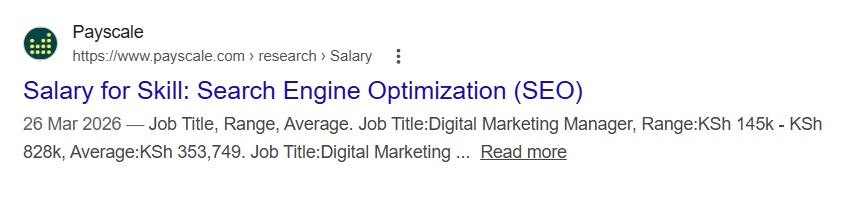
In Kenya, salaries ranging from Ksh 120,000 ($930) to Ksh 300,000 ($2,325) are becoming more common for candidates who can demonstrate measurable impact on visibility, a strong content strategy, and a clear understanding of digital performance.
Global markets show a similar trajectory, supported by increased investment in AI-driven search positioning.
Search Behaviour Is Changing Faster Than Skills
Search trends reflect a shift in how people seek and consume information.
Interest in terms such as “AI search”, “SEO vs GEO, “AI visibility”, and “search algorithm changes” has grown significantly over the past year.
Queries like “keyword research tools” and “on-page SEO checklist” continue to grow at a slower pace.
This shift reflects a move from optimising for rankings to focusing on visibility and interpretation.
What This Means for the Industry
These signals point to a consistent pattern: organisations are adjusting, hiring is evolving, and expectations are rising.
The gap lies in readiness.
Professionals who understand how content is structured, how information is interpreted, and how visibility is achieved are becoming increasingly valuable.
A Defining Shift for the Digital Economy
The rise of AI search is silently reshaping the digital economy.
Publishers are already reporting declining referral traffic due to AI-generated summaries.
Brands are restructuring content strategies.
Agencies are reorganising teams.
Companies are hiring aggressively.
The Hezron Insights analysis suggests that the future of digital visibility may no longer belong only to brands that rank highly on search engines.
It may increasingly belong to brands that AI systems can understand, trust, summarise, and recommend consistently across the web.
That reality is creating a new generation of digital professionals whose expertise sits at the intersection of communication, AI systems, search visibility, and structured authority.
The future of search marketing is no longer just SEO.
It is becoming brand visibility across the entire AI-powered information ecosystem.
Hezron Ochiel is a Strategic Communications Expert at Kenya Medical Training College (KMTC), a leading government health training institution in Kenya. He is a PRSK Moran Award winner, a visibility strategist, and the founder of Hezron Insights. His work focuses on strategic communication, AI visibility, digital authority, and leadership storytelling across Africa.