By Hezron Ochiel
A few weeks ago, I had the opportunity to facilitate a personal branding training session attended by more than 100 managers in our organisation.
As we discussed the importance of building a digital footprint, LinkedIn quickly became the focus of the conversation. Most participants had accounts on the platform, yet very few were actively using them. Some had not updated their profiles in years, while others had never published a single post.
For many, LinkedIn was simply a place to store qualifications and employment history rather than a platform for building professional visibility.
During the tea break, a participant shared a story that perfectly illustrated the power of professional visibility.
A few weeks earlier, she had updated her LinkedIn profile. Not long afterwards, she received an unexpected message about a consultancy opportunity in neighbouring Tanzania. She had not applied for the assignment, contacted the organisation, or submitted a proposal. Someone searching for expertise had found her profile and reached out.
Her experience sparked an interesting discussion. It showed how opportunities can emerge when expertise becomes visible to the right people at the right time.
That story stayed with me because it reflected something I had been experiencing myself.
Several months earlier, I had decided to grow my LinkedIn presence. I refined my profile, clarified my areas of expertise, and began writing about life, sharing insights from my work, research, and professional observations.
My goal was to share knowledge and build a sustainable personal brand.
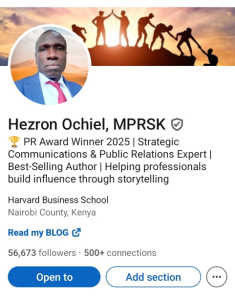 As the months passed, I noticed a steady increase in profile visits from recruiters, talent acquisition specialists, HR managers, and hiring managers. Some reached out with career opportunities, while others wanted recommendations from my professional network. I also discovered that LinkedIn posts I had published months earlier were appearing prominently whenever I searched my name online.
The experience made me curious.
Why were these things happening?
The answer points to a broader shift in how professionals are discovered, evaluated, and trusted. LinkedIn is gradually evolving into a search engine for expertise, where professional reputation is built, authority is demonstrated, and opportunities are increasingly discovered.
The Growing Importance of Discoverability
Many professionals possess impressive qualifications, years of experience, and valuable expertise. The challenge is that very few people outside their immediate circles know they exist.
This has become one of the defining professional challenges of the digital age. People cannot hire you, invite you to speak, recommend you, interview you, or collaborate with you if they cannot find you first.
Visibility is often the starting point. Once people become aware of your expertise, conversations begin. Those conversations create relationships, trust, and eventually opportunities.
This helps explain why two professionals with similar qualifications can experience very different outcomes. One becomes highly discoverable and frequently attracts opportunities, while the other remains largely invisible despite possessing comparable skills and experience.
The difference often comes down to how effectively they communicate their expertise.

Why Recruiters Are Searching Instead of Waiting
The growing importance of discoverability has transformed how recruiters identify talent.
LinkedIn now hosts more than one billion members worldwide, giving recruiters access to one of the largest professional talent pools ever assembled. The challenge is no longer finding people. The challenge is finding the right people quickly.
A recruiter searching for a communications specialist may begin with terms such as Public Relations, Corporate Communications, Media Relations, Strategic Communication, or Crisis Communication. Profiles containing these signals are more likely to appear in search results.
Finding a profile, however, is only the beginning.
Recruiters increasingly want evidence that supports the expertise listed on a profile. They read articles, review posts, examine recommendations, assess speaking engagements, and evaluate professional contributions. They want to understand how a person thinks, what they know, and how they create value.
A LinkedIn profile tells people what you do. The content you publish helps them understand what you know.
That distinction is becoming increasingly important in today’s professional environment.
Why Your Digital Footprint Matters
The growing reliance on LinkedIn searches reflects a broader shift in how professional reputations are formed.
For many years, reputation was built primarily through qualifications, work experience, and institutional affiliations. Those factors still matter, but they are no longer the only signals people consider.
Today, professional discovery often begins with a search.
When someone searches your name online, they are usually trying to answer a simple question: What is this person known for?
Potential employers evaluate it when considering candidates; clients review it before engaging consultants; and journalists and conference organisers use it to identify expert sources and speakers.
The information they find shapes their perception of your expertise.
Every article, newsletter, podcast appearance, and LinkedIn post contributes to that perception. Over time, these individual pieces create a searchable record of your professional knowledge, experience, and interests.
In many ways, your digital footprint has become an extension of your professional reputation.

Why AI Search Is Changing the Rules
The importance of digital footprints is growing even further as AI search becomes part of everyday information discovery.
People are increasingly asking AI platforms questions that were previously directed to traditional search engines. Instead of searching for a communications consultant, someone may ask, “Who are respected communications experts in Kenya?” Instead of searching for a leadership speaker, they may ask, “Who writes about leadership and workplace culture in Africa?”
To answer these questions, AI systems need evidence.
They gather information from publicly available sources and identify patterns that suggest expertise, authority, relevance, and trust. Professional profiles, research publications, media interviews, websites, speaking engagements, newsletters, and LinkedIn activity all contribute to that evidence.
The more consistently these signals appear across the web, the easier it becomes for AI systems to associate a person with a particular area of expertise.
LinkedIn adds a particularly valuable layer by combining professional identity with ongoing demonstrations of knowledge. Every article, recommendation, newsletter, and post becomes part of a growing body of evidence that both people and AI systems can evaluate.
This shift is closely connected to themes I explored in my recent article on how AI search is changing trust, visibility, and public relations in Africa. As AI platforms become part of everyday information discovery, authority signals are becoming increasingly important.
The same content helping recruiters discover expertise today may help AI systems understand expertise tomorrow.
How Visibility Creates Opportunity
The value of visibility becomes easier to understand when we look at how opportunities are created.
The value of visibility becomes clear when opportunities begin to appear. As expertise becomes easier to discover, it opens doors to new conversations, professional relationships, collaborations, consultancy assignments, speaking engagements, and career opportunities.
The participant in our training session experienced this firsthand when a consultancy opportunity came her way.
The opportunity appeared because her expertise became visible to the right audience at the right time.
Many professional opportunities follow a similar path. Someone discovers expertise, a conversation begins, trust develops, and eventually an opportunity emerges.
This is one reason personal branding continues to gain importance across industries. Its purpose is not self-promotion but to make expertise easier to discover.
Five Mistakes That Keep Professionals Invisible
Many talented professionals unintentionally limit their visibility.
The first mistake is creating a LinkedIn account and assuming opportunities will automatically follow. A profile alone rarely generates meaningful opportunities.
The second mistake is using generic descriptions such as Manager, Consultant, or Professional. Specific expertise is easier to discover and easier to remember.
The third mistake is discussing too many unrelated topics. People tend to associate expertise with consistency, making it harder to establish authority when messaging is scattered across multiple subjects.
The fourth mistake is treating valuable experience as private knowledge. Research findings, lessons learned, observations, and case studies often contain insights that others genuinely want to learn from.
The fifth mistake is focusing exclusively on qualifications. Credentials explain what you have achieved, while content demonstrates what you know. The strongest professional brands combine both.
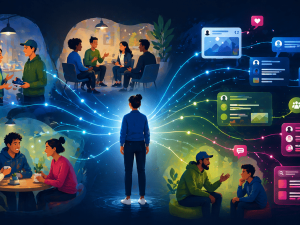
A Practical Framework for Building Visibility
Fortunately, building professional visibility does not require complicated strategies.
The process begins with clarity. Start by defining what you want to be known for and the expertise you want associated with your name.
Next, connect LinkedIn to your website, publications, presentations, podcasts, research, and professional portfolio. This creates a stronger network of authority signals across the web.
From there, focus on publishing consistently and sharing useful insights drawn from your work and experience. At the same time, engage meaningfully with people in your field and contribute to conversations that matter.
Finally, transform everyday professional experiences into lessons that others can learn from. Over time, these actions strengthen discoverability, establish authority, and create a searchable record of expertise.
LinkedIn’s Place in a Larger Visibility Ecosystem
LinkedIn is powerful, but it does not operate in isolation.
It works alongside websites, articles, media coverage, newsletters, podcasts, research publications, and professional communities. Together, these channels create a broader ecosystem of visibility that influences how people and AI systems evaluate expertise.
This is why discussions about AI search, digital visibility, SEO, GEO, and brand reputation are becoming increasingly connected.
In my recent article on the rising demand for SEO and GEO talent, I discussed how organisations are looking for professionals who understand visibility across both traditional search engines and AI-powered platforms.
I also explored how PR professionals can use Reddit to improve brand reputation and AI search visibility. The same principle applies across platforms. Spaces that consistently demonstrate expertise and credibility create signals that help people and systems understand authority.
Similarly, in my article on how AI search is reshaping digital PR and SEO, I explained how authoritative content, visibility, and trust increasingly influence how search engines and AI systems evaluate both individuals and organisations.
LinkedIn has become an important part of that ecosystem because it brings together professional identity, expertise, credibility, and ongoing contributions in one place.
Frequently Asked Questions
Can LinkedIn help me get job opportunities?
Yes. Recruiters increasingly use LinkedIn to identify and evaluate candidates before making contact. A strong profile supported by useful content improves discoverability and increases the likelihood of being found.
Does LinkedIn influence AI search visibility?
Indirectly, yes. LinkedIn provides publicly available signals about expertise, professional identity, authority, and credibility that AI systems can evaluate alongside other sources.
How often should I post on LinkedIn?
Consistency matters more than frequency. Sharing useful insights regularly helps create a searchable record of expertise that grows stronger over time.
The Future Belongs to Discoverable Experts
I often think about the participant who received a consultancy opportunity shortly after updating her LinkedIn profile.
Her expertise had become easier to find, creating an opportunity that might otherwise never have emerged.
That is the shift many professionals are beginning to experience.
Opportunities increasingly begin with a search. Recruiters search for talent, journalists search for expert sources, conference organisers search for speakers, clients search for trusted advisors, and AI systems search for signals that indicate authority and expertise.
The professionals who invest in making their expertise visible are positioning themselves to be discovered when those searches happen.
My LinkedIn experience helped me understand how professional visibility works. The same actions that made my profile easier for recruiters to discover are also helping search engines and AI systems understand my expertise.
That realisation changed how I think about professional visibility.
Professionals who invest in making their expertise visible position themselves to be discovered when opportunities arise. As more career opportunities, partnerships, speaking engagements, and professional connections begin with a search, discoverability is becoming one of the most valuable professional assets a person can build.
Those who recognise this shift early are more likely to be found, trusted, and recommended when their expertise is needed.
The question is no longer whether LinkedIn matters.
The question is whether your expertise is visible enough to be discovered.
Hezron Ochiel is a strategic communications and public relations professional with over 15 years of experience in media, digital communication, and reputation strategy. He serves as the Deputy Corporate Communications Manager at the government-owned Kenya Medical Training College (KMTC) and is the founder of Hezron Insights, where he writes about AI visibility, Digital PR, SEO, GEO, and digital authority. His work has appeared on platforms including Reuters, The New Humanitarian, and The Standard.