
A practitioner case study on how coalition building, community voices, media engagement and policy advocacy can work together to influence public policy.
By Hezron Ochiel
For years, thousands of Community Health Workers served Kenyan households with limited formal recognition and support.
They educated families about disease prevention, promoted maternal and child health, supported referrals and connected communities with health facilities.
Then, on September 25, 2023, Kenya took a major step.
President William Ruto flagged off kits for 100,000 Community Health Promoters (CHPs) across the country’s 47 counties and announced that the National Government would support their remuneration through stipends.
A few months later, the government launched a national stipend payment programme for Community Health Promoters.
For many Kenyans, these were major public health announcements. For some of us who had participated in years of communication and advocacy around Community Health Workers, the work was part of a much longer policy journey.
While working at Amref Health Africa, my role included engaging with journalists, health storytelling, developing communication materials, and documenting community experiences related to health-system advocacy.
The programme worked across five African countries — Kenya, Uganda, Tanzania, Malawi and Zambia. About 600 journalists were engaged through the Africa Media Network on Health and related activities, while parliamentarians in all five countries were reached through policy and advocacy engagement.
Looking back, the experience provides a useful media advocacy case study.
It shows how an issue can gain policy momentum when communities, civil society organisations, journalists and decision-makers are connected through several routes of influence.
Case Study at a Glance
Issue: Recognition and support of Community Health Workers
Countries involved: Kenya, Uganda, Tanzania, Malawi and Zambia
Advocacy focus: Recognition, remuneration and integration of Community Health Workers into health systems
Media engagement: About 600 journalists engaged through the Africa Media Network on Health and related activities
Policy engagement: Parliamentarians reached across all five countries, alongside engagement with regional and continental institutions, including the African Union (AU), the East African Community (EAC), and the Common Market for Eastern and Southern Africa (COMESA).
Approaches: Coalition building, policymaker engagement, community mobilisation, media advocacy and political engagement
Key Kenya policy milestones: Rollout of 100,000 Community Health Promoters in 2023, enactment of the Primary Health Care Act, 2023, and subsequent implementation of a national CHP stipend programme
Key lesson: Media advocacy is more powerful when it is part of a broader system of policy influence.
Why Community Health Workers Mattered
My connection with Community Health Workers began long before I became a communication professional.
I grew up in a village where Community Health Volunteers were familiar faces.
During disease outbreaks and other health concerns, they were often among the first people to visit households, share information and help families understand what they needed to do.
Years later, when I joined Amref Health Africa in 2017, I encountered their work from a professional perspective.
I travelled to communities, listened to their experiences and documented some of their work through videos and other communication products.
That experience gave me a closer view of people performing important public health functions while seeking greater recognition and support within the health system.
Community Health Workers provide an important bridge between households and health facilities. Their work includes health education, disease prevention, referrals and support for maternal and child health.
Their recognition was therefore both a workforce issue and a health-systems issue.
The Advocacy Context
At Amref, I became involved in communications related to the Health Systems Advocacy Partnership.
The programme worked in Kenya, Uganda, Tanzania, Malawi and Zambia, bringing together organisations working on health systems, health financing and community health.
One of the issues advanced through this wider advocacy ecosystem was stronger recognition and support for Community Health Workers.
The work reached communities, journalists, policymakers and legislators.
Parliamentarians across all five programme countries were engaged, while about 600 journalists participated through the Africa Media Network on Health and related media activities.
The scale mattered because the issue was carried through several channels rather than depending on occasional media coverage.
Looking back at the experience, I see five connected layers that help explain how communication can contribute to policy influence.
I call this the Five-Layer Advocacy Influence Model.
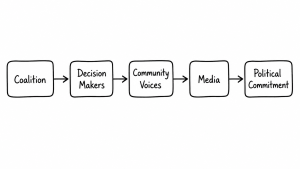
The Five-Layer Advocacy Influence Model
Coalition building, policymaker engagement, community participation and media relations are established advocacy practices.
The value of this model lies in how the layers reinforce one another.
A community voice can become a compelling media story. A coalition can provide journalists with access to evidence and experts, while media coverage can increase an issue’s visibility among policymakers.
Political commitments can then create a basis for further advocacy and accountability.
Influence grows through these connected pathways.
1. Build a Coalition Around the Issue
Public policy problems are rarely solved by one organisation.
Community health advocacy involved organisations, networks, health professionals, development partners and community actors across the five programme countries.
They brought different strengths, including technical expertise, community access, research, and relationships with decision-makers.
Together, they helped keep community health within the wider health-policy conversation.
Lesson: Policy advocacy needs an ecosystem.
Communication becomes stronger when credible actors reinforce the same policy concern from different positions.
A coalition also allows a public-interest issue to grow beyond the identity of one organisation.
2. Engage the People Who Can Make the Decision
Policy advocacy must reach the people and institutions with the authority to act.
The programme therefore engaged policymakers and legislators across the five countries.
This mattered because parliamentarians influence laws, budgets, oversight and government priorities.
The lesson is simple: Start with the desired action and identify who can make it happen.
If the goal is legislation, the campaign must reach legislators. If the goal is funding, it must reach the people who shape budgets.
I explore this principle further in Stop Building Communication Strategies Around Platforms. Build Them Around Audience Behaviour.
Communication becomes more strategic when it begins with the audience, information need and desired action.
3. Put Community Voices at the Centre
Another important part of the advocacy involved creating opportunities for Community Health Workers to speak about their own experiences.
One example was the Dear Minister campaign.
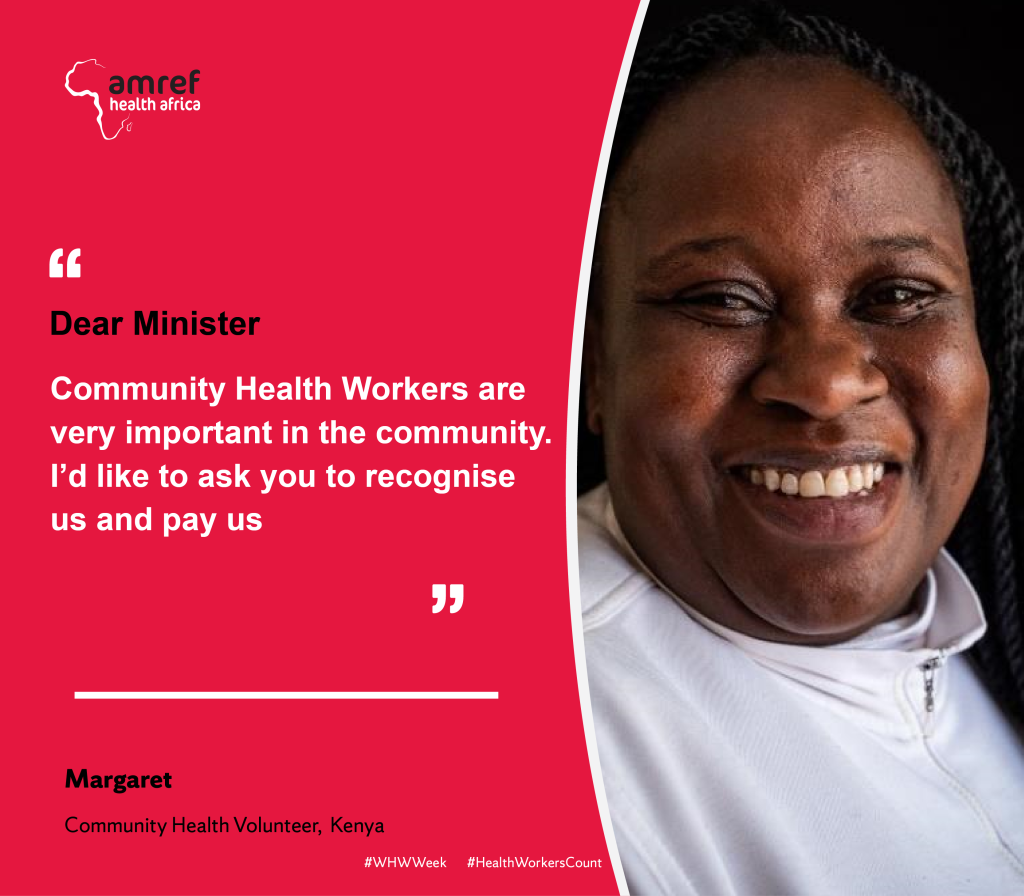
Community Health Workers used videos, audio recordings, and posters to communicate directly with health decision-makers.
Their message was clear: their contribution needed recognition and support.
Technical evidence can show the scale of a problem. Lived experience helps people understand what that problem means in everyday life.
Effective advocacy needs both.
Lesson: The people closest to an issue should have meaningful opportunities to speak.
Their voices add context, credibility and urgency while helping advocacy move beyond organisations speaking on their behalf.
4. Use Media to Sustain Attention
Media engagement formed an important part of the advocacy ecosystem.
Through the Africa Media Network on Health, about 600 journalists were engaged around health reporting and health-system issues.
The network gave journalists access to information, experts, policy developments and community perspectives.
The approach went beyond sending press releases. Journalists need credible evidence, clear context and access to people who can explain an issue well.
Media coverage included interviews, features, opinion pieces and broadcast discussions.
The wider network created more opportunities for community health issues to enter public debate across different countries.
Lesson: Effective media advocacy makes complex policy issues easier to understand.
The media can translate legislation, budgets, and policy debates into stories that citizens and decision-makers can follow.
It also creates a public record that can remain discoverable long after the original campaign has ended.
I explore the wider importance of credible digital records in The Ultimate Guide to AI Search, Brand Reputation, and Public Relations in Africa.
5. Move the Issue Into Political Commitments
Election periods create important opportunities for advocacy because political parties are deciding what issues to prioritise and what commitments to make to citizens.
Health advocates therefore engaged political actors as parties developed their manifestos and health priorities.
The aim was to place important health issues within the political conversation before a new government took office.
Community health later became prominent within Kenya’s primary healthcare and Universal Health Coverage agenda.
In September 2023, the President flagged off kits for 100,000 Community Health Promoters and announced government support for their remuneration.
The Primary Health Care Act, 2023 subsequently provided a formal legal framework for Community Health Promoters, followed by implementation of a national stipend programme.
These developments represented a significant change in how community-level health workers were recognised and supported.
What Can We Reasonably Attribute to Media Advocacy?
Communication professionals need to be careful when claiming impact.
The recognition of Community Health Promoters cannot reasonably be attributed to a single media campaign, organisation, or advocacy intervention.
Many actors and institutions contributed over time through legislation, community mobilisation, media coverage, expert evidence, political commitments and health-system reform.
Media advocacy was one part of this wider influence system.
Its contribution was to help keep community health visible, understandable, and present in public and policy discussions.
That distinction matters when evaluating communication.
Media coverage is an output. Policy movement is an outcome, and the connection between the two requires evidence.
In What PR Teams Should Measure in 2026, I argue that communication measurement should examine visibility alongside understanding, trust, stakeholder action, and organisational outcomes.
For advocacy campaigns, useful questions include:
- Did the right decision-makers encounter the issue?
- Did stakeholder understanding improve?
- Did the issue enter policy discussions?
- Were political commitments made?
- Did legislation, funding or implementation change?
- What evidence connects communication activities with those outcomes?
These questions provide a stronger picture of advocacy impact than media counts alone.
Five Media Advocacy Lessons for Communication Professionals
1. Begin with the policy objective
Know what needs to change and who has the authority to change it.
Communication activity should follow that objective.
2. Create several routes to influence
Journalists, communities, policymakers, coalitions and political institutions play different roles.
Connecting them gives an issue more opportunities to gain attention and support.
3. Give affected communities meaningful visibility
People experiencing an issue should have opportunities to speak for themselves.
Their voices add context, credibility and urgency.
4. Treat journalists as knowledge partners
Strong media engagement requires evidence, context, credible sources and access to people who understand the issue.
5. Measure movement towards the desired outcome
Media mentions matter, but they should be considered alongside stakeholder understanding, policy attention, political commitment and institutional action.
What Makes the Five-Layer Advocacy Influence Model Useful?
The model does not suggest that advocacy follows a fixed sequence.
Its value lies in showing whether the main routes to influence are connected.
The order may change depending on the issue, but the principle remains the same.
Advocacy becomes stronger when different routes to influence reinforce one another.
The model also helps communication teams identify gaps.
A campaign may have strong media visibility but little access to decision-makers. Another may have strong engagement with policymakers but weak evidence.
Looking at the whole influence system makes these weaknesses easier to see.
How to Apply the Five-Layer Model
Before launching a major advocacy campaign, ask five questions.
Coalition
Who else has an interest in this issue?
Identify credible organisations, professional groups, researchers, communities and other potential allies.
Decision Makers
Who can actually change the situation?
Identify the institutions and individuals with authority over legislation, budgets, regulation or implementation.
Community Voices
Whose lived experience makes the issue real?
Create meaningful ways for affected people to communicate their experiences directly.
Media
Who can help explain and sustain attention around the issue?
Give journalists credible evidence, accessible experts, context and community sources.
Political Commitment
Where must the issue eventually become institutionalised?
Look for pathways into policies, legislation, budgets, manifestos, strategies and implementation plans.
These questions can help advocacy teams move from communication activity to a clearer system of influence.
What Other African Advocacy Campaigns Can Learn
The lessons from Kenya’s community health experience extend beyond healthcare.
The wider programme across Kenya, Uganda, Tanzania, Malawi and Zambia also demonstrates the value of building cross-border advocacy networks.
Across Africa, organisations advocate around public issues that require technical evidence, community support, media attention and policy action.
Communication can help connect these elements.
It can make technical issues understandable, give communities greater visibility, equip journalists with reliable information and help decision-makers understand what is at stake.
It can also preserve African advocacy knowledge for future practitioners, researchers and policymakers.
Too much useful knowledge disappears when programmes end.
Documenting real advocacy experiences as case studies can help build a stronger African evidence base for strategic communication.
An Important Research Question Remains
This case raises a question that deserves deeper study:
Which advocacy and communication interventions contributed most to the institutional recognition of Community Health Promoters in Kenya?
A future study could use process tracing to examine media coverage, policy documents, parliamentary debates, political manifestos and interviews with key actors.
It could also examine how the programme’s engagement with about 600 journalists and parliamentarians across five countries interacted with wider policy developments.
Such research could help establish where communication made its strongest contribution and add locally grounded African evidence to the study of media advocacy.
Final Thought
Kenya’s recognition of Community Health Promoters emerged from a long policy journey involving communities, government institutions, civil society organisations, journalists, health professionals, political actors and development partners.
The lesson lies in how those forms of influence accumulated.
That is the central idea behind the Five-Layer Advocacy Influence Model.
Media advocacy becomes more valuable when it connects evidence, lived experience, public attention and policy action.
Hezron Ochiel is an award-winning strategic communications and public relations professional with over 15 years of experience in media, digital communication, and reputation strategy. He serves as the Deputy Corporate Communications Manager at the government-owned Kenya Medical Training College (KMTC) and is the founder of Hezron Insights, where he writes about AI visibility, Digital PR, SEO, GEO, and digital authority. His work has appeared on platforms including Reuters, The New Humanitarian, and The Standard.